Every hour a commercial truck sits idle costs money. The American Transportation Research Institute puts that number somewhere between $448 and $760 per hour — and that’s before you factor in towing, missed deliveries, or a repair that doesn’t actually fix the problem. In Wayne County, MI, where freight traffic runs around the clock and automotive suppliers operate on just-in-time schedules, a breakdown isn’t just inconvenient. It can ripple through an entire supply chain. So when something goes wrong on the road, the instinct is to call whoever shows up fastest. That instinct is understandable. It’s also how a lot of drivers end up worse off than when they started.
What Commercial Truck Repair Requires — and Why It's Not Like Regular Auto Work
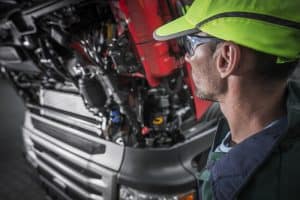
Commercial truck repair covers the full range of mechanical, electrical, and structural work needed to keep heavy-duty vehicles operating safely and legally. That includes everything from brake systems and diesel engine diagnostics to trailer repairs, DOT inspections, air ride suspension, and reefer unit service. It’s not the same as taking a pickup to a general auto shop.
Heavy-duty diesel engines — the kind powering Freightliners, Peterbilts, Kenworths, and Macks — operate under entirely different conditions than passenger vehicles. High-pressure fuel injection, turbocharging, advanced emissions controls, and complex drivetrain systems require specific training, specific tools, and genuine experience. A mechanic who works on gasoline engines all day is not automatically qualified to diagnose a Detroit Diesel or a Cummins. The gap between the two is wide enough to turn a manageable repair into an expensive misdiagnosis.

Why Wayne County, MI Drivers Are Especially Vulnerable to Repair Scams
Wayne County, MI is one of the busiest freight corridors in the Midwest. I-94, I-75, I-96, I-275, and I-696 carry enormous commercial vehicle volume every day — trucks moving automotive parts to assembly plants in Dearborn and Romulus, air cargo loads from DTW, cross-border freight heading toward the Ambassador Bridge. That density of traffic, combined with Michigan’s brutal winters and notoriously punishing road conditions, means breakdowns happen constantly and often in high-pressure situations.
That’s the environment fraudulent repair services are designed to exploit. Phony roadside operations specifically target areas with high truck traffic, and they count on out-of-town drivers who don’t know the local market. A driver stranded on I-94 near Romulus at 2am isn’t in a position to do careful research. They need someone now. And the first voice that answers the phone often gets the job — regardless of whether they’re actually qualified to do it.
A 2023 survey by American Trucks found that 50 percent of vehicle owners had been pitched unnecessary repairs, 35 percent were overcharged for parts or labor, and 13 percent were charged more than the original quote. These numbers come from general auto repair — in the commercial truck space, where jobs are more complex and costs are higher, the stakes of choosing wrong are significantly greater.
The I-94 Restore project currently underway in Wayne County, MI is already changing truck routing patterns and adding stress to vehicles navigating construction zones. More road stress means more breakdowns. More breakdowns mean more opportunities for bad actors to show up first. Understanding what to watch for isn’t paranoia — it’s basic protection for your livelihood.
The Specific Red Flags That Signal a Bad Commercial Truck Repair Provider
The clearest warning sign is a verbal-only estimate. Any reputable mechanic will give you a written quote before touching your truck. If someone tells you “we’ll figure out the price when we’re done,” that’s not flexibility — that’s a setup. AAA research shows two out of three drivers don’t trust auto repair shops, and the price bait-and-switch is the single most common reason why. Get it in writing, or don’t let them start.
Watch for vagueness around credentials. “We work on all trucks” is not a qualification. Ask directly: Are your mechanics ASE certified? Do they have experience with your specific engine brand? ASE’s T-series certification covers diesel engines, drivetrains, brakes, electrical systems, and more — it’s the industry’s recognized baseline for heavy truck technicians. A shop that can’t name a single verifiable credential is a shop worth walking away from.
Be cautious of any provider who refuses to show you the part they supposedly replaced. This is a documented tactic — charging for new components while installing used or inferior ones, or billing for work that was never performed. If a mechanic gets defensive when you ask to see what came off your truck, that defensiveness is telling you something.
Surge pricing is another red flag that’s easy to miss in an emergency. Some roadside services charge dramatically higher rates at night, on weekends, or on holidays — exactly when most breakdowns happen. If a provider won’t confirm their rate upfront or hedges around what “emergency service” costs, push for a clear answer before you agree to anything.
Finally, pay attention to response time claims versus reality. Multiple drivers in Wayne County, MI have described calling “24/7” services only to get voicemail or indefinite wait times. A provider advertising round-the-clock availability should be able to give you a specific ETA — not a vague “we’ll get there when we can.”
Mobile Diesel Truck Repair: What It Should Actually Look Like
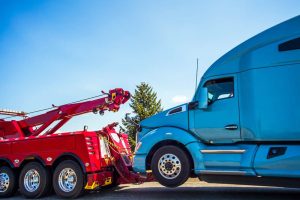
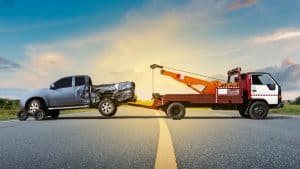
A legitimate mobile diesel truck repair operation is more than a van and a jump pack. When a qualified provider shows up, they should have diagnostic computers capable of reading your truck’s fault codes, compressors for air system work, welding equipment for structural repairs, and the parts inventory to handle common failures on the spot. The goal is always to fix it where it sits — because towing an 80,000-pound truck costs over $1,000 before any repair work even begins.
The difference between a provider who can handle a repair in the field and one who can’t often comes down to equipment and training. A mechanic without up-to-date diagnostic tools may misread a fault code and recommend unnecessary work. A mechanic without the right equipment may start a job they can’t finish — leaving you worse off than before they arrived.

What Mobile Diesel Service Should Cover on a Single Call
A well-equipped mobile diesel service should be able to address a wide range of issues without sending you to a shop. Engine diagnostics and fault code reading, brake repairs including ABS systems, air line repairs, fuel delivery, tire changes, battery replacement, and basic electrical troubleshooting are all reasonable expectations for a qualified mobile unit. For trailer-specific issues — air ride suspension, landing gear, reefer units, electrical — the same standard applies.
The reason this matters is simple: every additional call you make extends your downtime. If a mobile provider shows up and can only handle half the problem, you’re still stuck waiting for someone else. That’s another hour at $448 to $760 in losses, plus the risk of a second provider with their own set of unknowns.
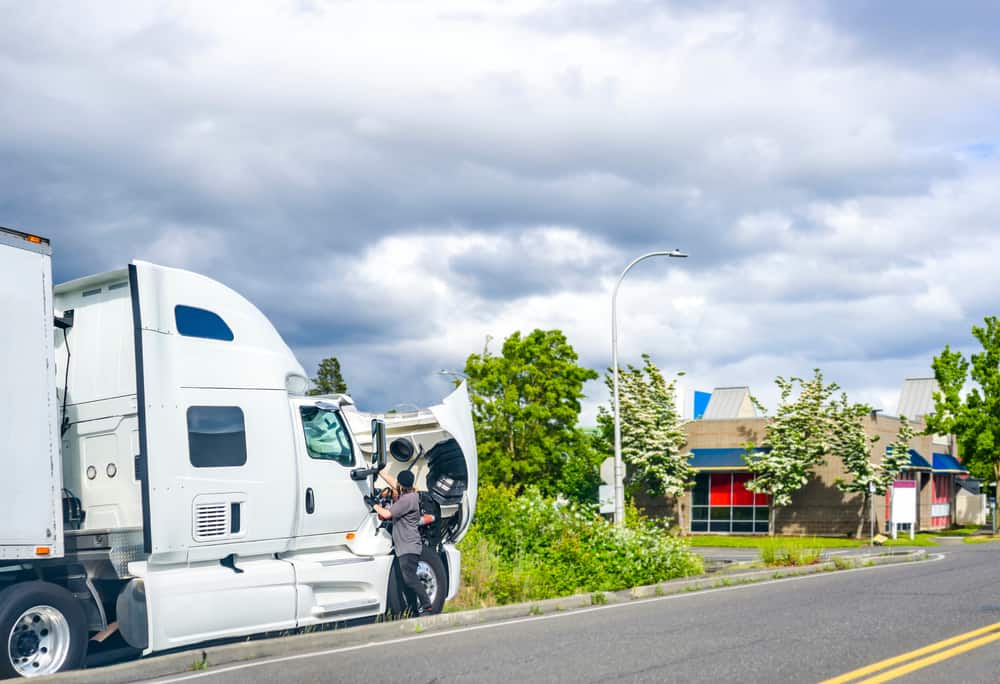
When we respond to a breakdown anywhere across Wayne County, MI — whether that’s on I-75 through Detroit, I-94 near Romulus, I-275 in Westland, or I-96 heading toward Livonia — our mobile units carry the equipment to diagnose and repair on-site. The goal every time is to get you moving without a tow. That’s not always possible, but it’s always the first objective.
For drivers running Freightliners, Peterbilts, Kenworths, Volvos, Internationals, Macks, or Western Stars — and trailers from Great Dane, Utility, Hyundai, or Manac — having a provider who actually knows your equipment matters. Showing up with generic tools and a general knowledge of “trucks” isn’t the same as knowing the specific failure patterns of a Detroit Diesel Series 60 or a Cummins ISX.
How to Quickly Verify a Truck Repair Provider's Credentials Before You Call
When you’re stranded on the shoulder of I-94 in Wayne County, MI, you don’t have time for a lengthy vetting process. But a 60-second check can still tell you a lot. Start with reviews — not the star rating, but the text. Look for specifics: did the reviewer mention a named mechanic, a particular repair, a match between the estimate and the final bill? Generic five-star reviews with no detail are easy to fabricate. Detailed reviews with specific job descriptions are harder to fake.
Ask directly about certifications. ASE certification for heavy trucks — specifically the T-series — is the industry standard. A provider who can name their certifications without hesitation is a provider who’s used to being asked. One who gets evasive or pivots to vague experience claims is worth questioning further.
Check how long the company has been operating. Longevity in this market isn’t a guarantee of quality, but it does filter out fly-by-night operations that appear after a highway construction project and disappear just as fast. A business that’s been serving Wayne County, MI drivers for decades has a track record you can actually evaluate.
At J&J Truck & Trailer Repair, we’ve been doing this work since 1999, and our lead mechanic Dr. Phillip Marin holds three Ph.D. degrees — in Diesel Engineering, Drivetrains, and Metal Alloys. That’s not a credential you’ll find at most roadside operations. It means that when something unusual comes up, there’s a depth of knowledge behind the diagnosis that goes well beyond standard certification. Our rates are the same at midnight on a Sunday as they are at noon on a Wednesday — no surge pricing, no surprises. And we give written estimates before any work begins.
One customer called us on a Monday morning after their truck went down at a delivery location. We were on-site within 30 minutes and had the job finished before they expected us to arrive. That kind of response is what 24/7 availability should actually mean.
Finding Reliable Commercial Truck Repair in Wayne County, MI
The commercial truck repair market in Detroit and Wayne County, MI has qualified providers — but it also has operations that count on driver urgency to get away with shoddy work and inflated billing. Knowing the red flags doesn’t make you cynical. It makes you harder to take advantage of when the pressure is highest.
The short version: get a written estimate, verify credentials, confirm flat-rate pricing, and ask whether the mobile unit actually has the equipment to finish the job on-site. Those four questions will eliminate most of the bad options before anyone touches your truck.
If you’re looking for a provider you can call once and trust completely, J&J Truck & Trailer Repair is available 24/7 at 313-999-3088. We’re based in Detroit and serve the full Wayne County, MI area — ready when you need us, with the credentials and equipment to back it up.