If your trailer passed its annual inspection last spring, it’s easy to assume you’re set for winter. Plenty of haulers in Wayne County and Monroe County think that way, right up until the first hard freeze turns up a dead marker light, a sticking brake chamber, or a winch that won’t turn. Brine season along I-75 and I-94 doesn’t care what your inspection report says.
This guide walks through what to check on flatbeds, drop decks and lowboys before the salt trucks roll, what you can handle yourself, and what’s worth handing off to us. First, let’s look at why the annual inspection only gets you part of the way.
Flatbed Trailer Maintenance In Detroit: What The Annual Inspection Doesn't Cover
Under 49 CFR 396.17, every commercial vehicle needs a comprehensive inspection at least once every 12 months, and the report has to be kept for 14 months. A trailer over 10,001 lbs GVWR counts as its own vehicle, so yours needs its own. A roadside inspection doesn’t count in its place, since a 2016 federal rule closed that door.
Here’s the catch: the annual is a pass/fail snapshot of one day. A trailer can clear it in March and spend the next nine months taking salt spray, potholes and freeze-thaw cycles. Maintenance is the work that happens in between, and in Southeast Michigan, fall is when it pays off most.
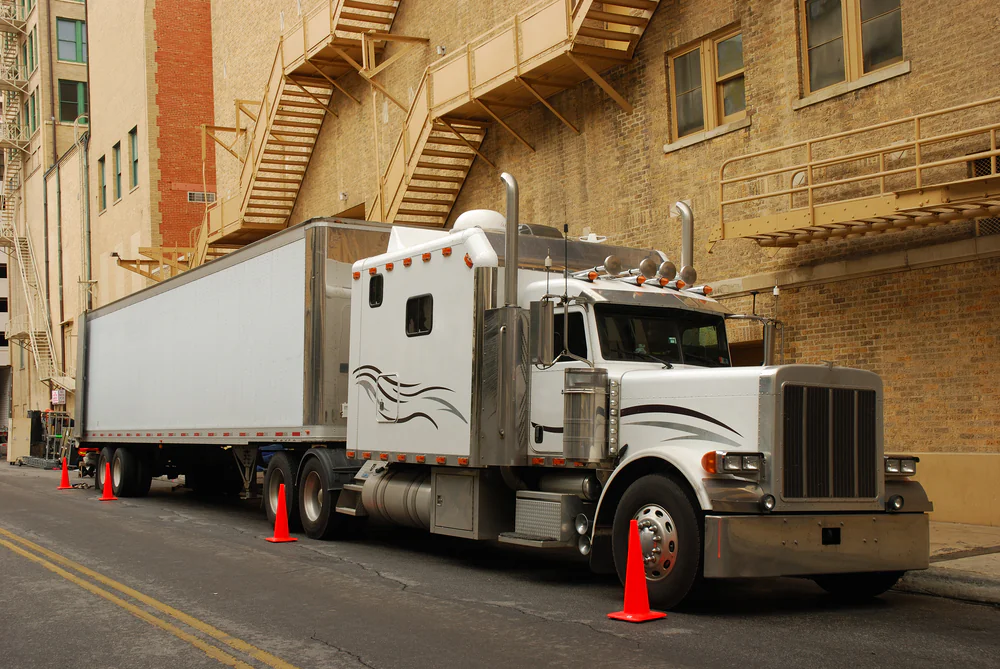
What Should A Pre-Winter Flatbed Trailer Inspection Include?
Start with the brakes and work toward the lights, since that’s roughly the order salt does its damage. Look over air lines and fittings for cracking and crusty buildup, listen for leaks at the glad hands, and check chambers, slack adjusters and drum linings. Moisture in the air system is what freezes in January, so a trailer that holds pressure in October can still fail on a single-digit morning if a fitting is already weeping.
Next come the wheel ends and tires. Hub seals usually leak long before a bearing quits, and a bearing running low on lube on a salted road gets hot fast under a heavy load. Look for oil streaks on the inside of the wheel, check studs and rims for corrosion, and make sure your tires are matched and properly inflated.
Electrical problems tend to sneak up on you. Salt lowers the electrical resistance of water, so a damp, chloride-soaked seven-way plug or a chafed wire starts causing flickers and dead lamps well before it quits completely. Give the plug and ground points a real look instead of a quick glance.
Then walk the frame and deck. Check crossmember welds, rust-through, soft or rotted wood, stake pockets and D-rings. Last, and most often skipped, is your securement gear: winches that haven’t seen grease in a year, frayed straps, chains and binders with unreadable load markings, and roll-tarp tracks and motors. Finding out your winch is seized while you’re fighting a tarp in freezing rain is a bad way to learn.
If you haul out of the Ambassador Bridge area or around the I-75/I-94 interchange, those stop-and-go loading runs on brine-covered pavement are exactly what this checklist is built for.
How Is Drop Deck And Lowboy Trailer Maintenance Different From A Flatbed?
A drop deck sits roughly two feet lower than a standard flatbed so it can carry taller loads under low bridges, and that lower deck changes where it wears. Ramps and their hinges take a beating, low-profile tires have less clearance and wear differently, and the welds where the deck drops down carry more stress than a flat deck ever sees. Those are the spots to look at first on a drop deck, on top of everything in the flatbed walk-around.
A lowboy, especially one with a detachable gooseneck, is a different animal. The detach mechanism, locking pins, hydraulic hoses, fittings and cylinders all need a look, and cold weather thickens hydraulic fluid and exposes hoses that were already tired. Add the ramps, the beavertail, any outriggers or deck extensions, and the welds at the gooseneck and deck transitions, where a bulldozer’s weight concentrates. A lowboy isn’t just a low flatbed, and a shop that treats it like one will miss things.
If you haul heavy equipment around Detroit, Downriver and down the I-75 corridor toward Monroe County, pay attention to how the load sits across your axles and how hot your wheel ends run after a long haul. Also check the integrity of each securement point, because chains are only as good as what they hook to.
We tow graders, bulldozers and other construction equipment above 10,000 lbs, so we know what those loads do to a trailer. We also build custom hydraulic hoses, and Dr. Phillip Marin, who holds three PhDs in diesel engineering, drivetrains and metal alloys, brings a particular eye to corrosion and weld wear. Late fall, when construction slows down and trailers sit more, is the best time to get this done.
Mobile Trailer Maintenance At Your Yard In Wayne County And Monroe County
Most trailer maintenance doesn’t need a shop bay. Brake and air-line checks, lighting and wiring repair, wheel-end inspections, hose work and a frame walk-around can all happen where the trailer already sits, as long as it is an industrial yard in southwest Detroit, a job site in Temperance, or a lot in Trenton.
We bring a truck stocked with the parts and tools most of these jobs call for, so you aren’t waiting on a second trip. When a job is bigger than a parking lot, we have shop space for it. Our base is at 8332 Kirkwood St in Detroit, and Monroe County is covered by our mobile unit rather than a second location.

What Does A Fair Trailer Maintenance Visit Look Like?
A good visit starts with someone walking the trailer with you, or at least explaining what we found in plain terms. You should hear what’s worn, what’s urgent, and what can wait until after the next big job. If you’re given a number for “trailer maintenance” before anyone has looked at the trailer, treat it as a guess.
Scope is where most disputes start. A brake inspection, a brake adjustment and a brake rebuild are three very different jobs, and the bill should match whichever one you agreed to. Ask what’s included, ask what would change the price, and ask for the findings in a form you can keep, because that record helps when your next annual inspection comes around.
This is how we run it. We tell you what we found and what it will take before we start, our rates are always the same, and there’s no extra charge for night, weekend or holiday calls. We also stand behind our work with a 100% satisfaction guarantee on all of our services. Because we carry most standard components on the truck, a lot of fixes get finished on the first visit instead of stretching into a second.
Real people answer our phone around the clock, which matters for another reason. If something gives out before your scheduled service, the same number that books your maintenance also covers a roadside call. You don’t have to start over with a different company when a trailer fails at 3 a.m.
Common Questions About Trailer Maintenance In Wayne County And Monroe County
How often should a flatbed be serviced? The annual inspection is the legal minimum, but a good rhythm is a full walk-around before winter, another after the salt season ends in spring, and a quick check whenever a trailer comes back from a hard haul. If you run daily, your driver’s end-of-day report is the first line of defense, so don’t ignore what it says about brakes, lights and tires.
Can you work on my trailer at my yard in Monroe County? Yes. Our mobile unit serves Monroe County, and a lot of that work happens along the I-75 corridor between Detroit and Toledo. If the problem turns out to be bigger than a roadside or yard job, we’ll bring it to our shop space in Detroit.
Will I pay more because it’s winter or because it’s a rush? No. We don’t add a surcharge for nights, weekends or holidays, and that holds in January just as it does in July.
How does road salt hurt a trailer? Salt-treated roads around Detroit and Downriver speed up corrosion in brake and air fittings, connectors and wheel-end hardware, and freeze-thaw cycles push moisture into seams and plugs. Potholes chip protective coatings and expose bare metal. That’s why we look at those parts before anything else.
What about a trailer that’s already acting up? If your brakes are grabbing, a bearing sounds off, or lights keep cutting out, don’t wait for the next scheduled check. Call us and we’ll tell you if it can wait or needs attention now.
Get Your Trailer Ready For A Detroit Winter Before The First Freeze
Call J&J Truck & Trailer Repair today at 313-999-3088 to schedule your pre-winter trailer maintenance and keep your fleet rolling safely all winter long.