
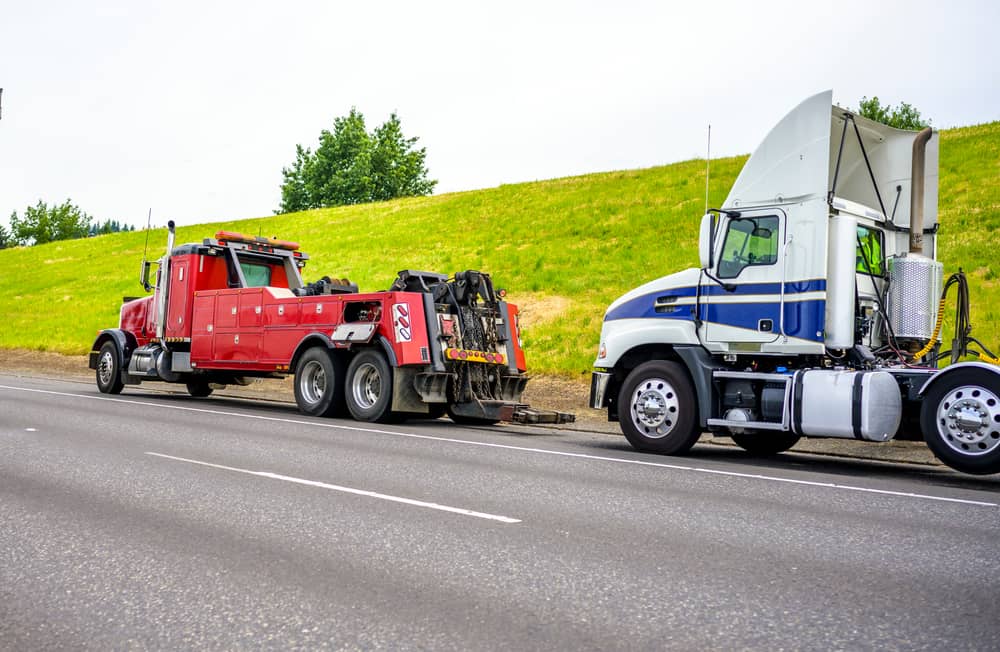
The trailer is nose-down in a ditch, the heater is ticking, and you’re trying to work out who to call, how long they’ll take, and what it’s going to cost. Nobody trains you for that moment. Most of what you find on your phone just says “we have rotators” and stops there. This is the walkthrough we wish every driver and dispatcher had in their back pocket: what to do in the first ten minutes, what a recovery looks like once the wrecker arrives, and what to check before the truck goes back on the road. First, a quick look at why winter around Detroit puts so many rigs where they don’t belong.
Why Semi Truck Recovery Spikes In Wayne And Monroe Counties During Winter
Towing moves a rig that’s sitting on the pavement. Recovery is what you need when it isn’t: a trailer on its side, a tractor buried to the axles, a jackknife across two lanes. Michigan counts winter-weather crashes from October through April, and in winter 2021–22 Wayne County led every county in the state with 4,160 of them. Statewide there were 35,782 winter-weather crashes, and heavy trucks and buses were involved in 1,976 of them, about 5.5 percent.
Black ice and refreeze catch careful professionals too, especially when the road looks wet and isn’t. When it happens to you on I-94 near Romulus, I-75 through Lincoln Park, or any of the Monroe County stretches where wind and speed combine, having a plan beats panic every time.
What Should I Do In The First 10 Minutes After My Semi Slides Off The Road?
Turn on your hazards and stay put unless you have to move. Don’t walk a freeway shoulder in the dark. A slid-off rig on a Wayne County freeway blocks traffic, and the biggest danger right then is the cars coming up behind you, not the ditch.
If anyone is hurt, or any part of your truck is sticking into a lane, call 911 first. If nobody’s hurt and you’re clear of traffic, call us directly at 313-999-3088. Tell us if police are already on the way so we can sort out the scene together.
The call goes faster when you have five things ready: the road and direction you’re traveling, the nearest exit or cross street, if you’re loaded or empty, what kind of trailer you’re pulling, and how the rig is sitting. Upright in the ditch, on its side, nose down and across a lane—all need different plans. Photos help if you can take them safely. We use those details to decide what to send, because the wrong truck costs you the first hour.
Say you’re on I-94 near Romulus close to Metro Airport and your tractor is buried in a snowbank beside a ramp. Tell us exactly that. Ramps and lots have different access than an open shoulder, and it changes the equipment and the approach. Then keep your phone charged and your bill of lading, registration, and insurance within reach. Don’t sign anything from anyone who turns up unannounced until you’ve read every line of it.
How Does Heavy Duty Semi Recovery Work?
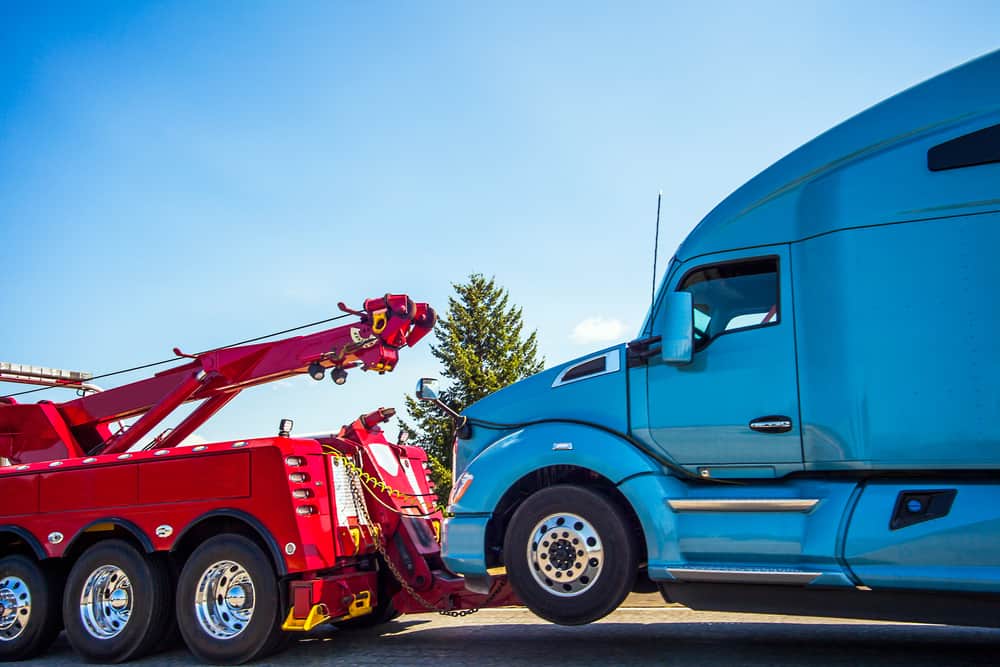
Once we know what you’ve got, we match the equipment to the load. Heavy wreckers run roughly 25 to 35 tons and rotator trucks run 50 to 75 tons, with a boom that turns 360 degrees. That’s how you lift a trailer back upright from an awkward angle without dragging it across the ground. We run heavy-duty wreckers and rotator trucks for vehicles over 10,000 pounds, which covers semis, dump trucks, box trucks, construction equipment, and commercial trailers.
When our truck arrives, the first job is looking, not pulling. We check how the rig is sitting, what’s underneath it, if the load has shifted, and what traffic is doing around you. Then comes rigging: where to anchor, where to attach, and how to plan the pull so we don’t fold a frame or tear off an axle.
After a rollover, an upright can take minutes once everything is set. A loaded tractor-trailer down an embankment can take hours. The general range in the industry runs from about thirty minutes for a simple breakdown to several hours for a real accident scene. If the load has to come off first, tell us up front so we can plan for it.
Then there’s the road itself. Closing a lane and clearing it often takes longer than the pull. A recovery is part heavy lifting, part traffic management. You’re allowed to ask where things stand at any point.
Heavy Duty Towing And Breakdown Recovery Across Wayne And Monroe Counties
We’re a family outfit working out of 8332 Kirkwood Street in Southwest Detroit, and we’ve been pulling trucks out of trouble since the 1980s. For tractor-trailer towing in Detroit and breakdown recovery across Wayne County, that means the I-94 corridor, I-96, I-75, and I-275, plus the towns around us: Romulus, Allen Park, Lincoln Park, and Northville.
Head south and I-275 runs down to meet I-75 in Frenchtown Township, with Telegraph Road (US-24) carrying trucks through Taylor and Carleton along the way. Monroe County is more open and rural than Wayne, so snow, wind, and speed can combine in ways you don’t see in the city. Same family, same phone number, and same rates on either side of the county line.
How Much Does Semi Truck Recovery Cost, And Can I Choose Where My Truck Goes?
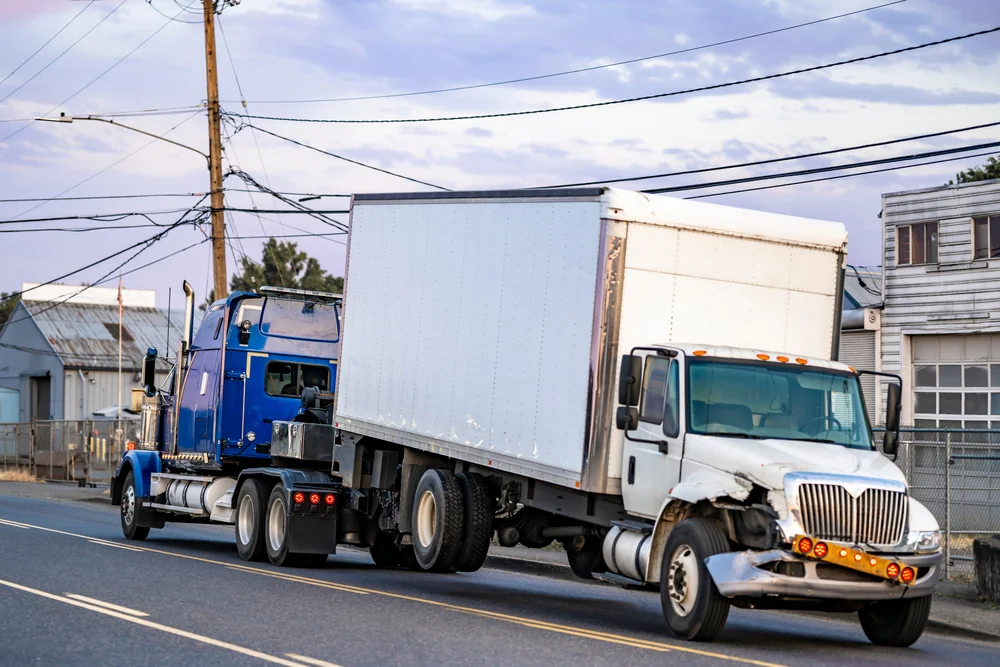
Price is the question every driver asks and almost no tow page answers. Recovery is billed on time and equipment: how big a rig it takes, how long it’s on scene, and if anyone is waiting on police clearance. One commonly cited 2026 guide puts recovery labor at roughly $150 to $250 an hour, plus wait time. On a trucker forum, one driver reported $850 for a quick upright of an empty 48-foot trailer, and the same thread says big recoveries can reach $10,000 to $20,000.
So ask before the hook goes on. What’s the rate, what counts as wait time, what’s the plan, and where is the truck going? Be wary of a number far below everyone else’s, since that can mean an uninsured operator. One Canadian carrier ended up with an $18,573 bill from a Chicago tow yard after its driver signed paperwork he didn’t fully understand. Read it first, every time.
Our rates are always the same, and we don’t charge extra for nights, holidays, or weekends. A 2 a.m. slide-off near Frenchtown Township is billed at the same rate as one at noon. You also decide where the truck goes, if that’s our facility or your preferred shop. Calling from Telegraph Road in Carleton or the I-94 stretch by Romulus, the answer is the same.
Is My Truck Safe To Drive After It Slides Off The Road?
Not automatically. A rig can come out of a ditch looking fine and still carry damage you can’t see from the cab. That might be a bent steering component, a pinched air line, a brake chamber knocked out of position, a cracked spring hanger, tires scrubbed on the sidewalls, or a frame or axle that’s no longer square. Those problems show up later, on the next hard stop or the next icy ramp.
Winter salt spray already wears on tires and brakes, so a post-slide inspection is a good time to catch both. Many tow-only outfits drag the truck to a yard and leave you to figure the rest out alone. We handle both ends.
Our truck mechanics are ASE certified, and Dr. Phillip Marin, who leads the shop, holds three Ph.D.s in diesel engineering, drivetrains, and metal alloys. For you, that means someone who understands how a drivetrain and the metal itself behave under stress can tell you if what’s bent is cosmetic or a failure waiting to happen. Dr. Phil and his son Jason have taken jobs other shops wouldn’t touch.
A lot of the work happens where the truck sits: air-system problems, brake work including ABS sensors, electrical faults, tires, and batteries. If it needs more than that, we tow it to our shop on Kirkwood Street or to the shop of your choice. One call covers the pull, the inspection, and the fix.
Semi Truck Towing Near Me In Detroit: Who To Call When Your Rig Slides Off In Winter
A winter slide-off feels chaotic, but the steps are simple. Get safe, call 911 if anyone is hurt or you’re in a lane, and give dispatch the road, direction, load, and position. Expect the recovery to be part pulling and part traffic management. Ask for the rate and the destination before anything is hooked up, and get the truck checked before it goes back on the road.
If you’re stuck anywhere in Wayne or Monroe County, call J&J Truck & Trailer Repair at 313-999-3088 for fast, professional semi truck recovery and heavy-duty towing.


