Most fleet managers have a version of the same story. A driver calls at 2 AM, a truck is down somewhere off I-94, and whoever gets called first becomes the vendor — not because they were the best option, but because they were the only number anyone had saved. That’s how fleets end up with surprise invoices, technicians who show up without the right parts, and trucks that sit for two days waiting on a repair that should have taken thirty minutes. This guide exists to change that. Before the next breakdown, here’s what you should actually be looking for in a commercial roadside assistance provider serving Wayne County, MI.
What Commercial Roadside Assistance Actually Covers for Fleets
Commercial roadside assistance is not the same thing as the plan that comes with a passenger car lease. The scope is completely different, and so are the stakes. A semi hauling auto parts to a Dearborn assembly plant doesn’t have the same tolerance for a two-hour wait as someone with a flat tire on a Sunday afternoon.
Real commercial roadside assistance for fleets means a technician who can diagnose and fix the problem on-site — not just hook up a tow and send the bill. It means heavy-duty capability for vehicles over 10,000 lbs, parts stocked on the mobile unit, and someone who can handle brake repairs, tire changes, jump-starts, fuel delivery, lockout situations, and mobile mechanical work without needing to haul the vehicle to a shop first.
The distinction matters because a tow costs significantly more in time and money than an on-site repair. When you’re evaluating vendors, the first question isn’t response time — it’s whether they can actually fix the problem when they get there.
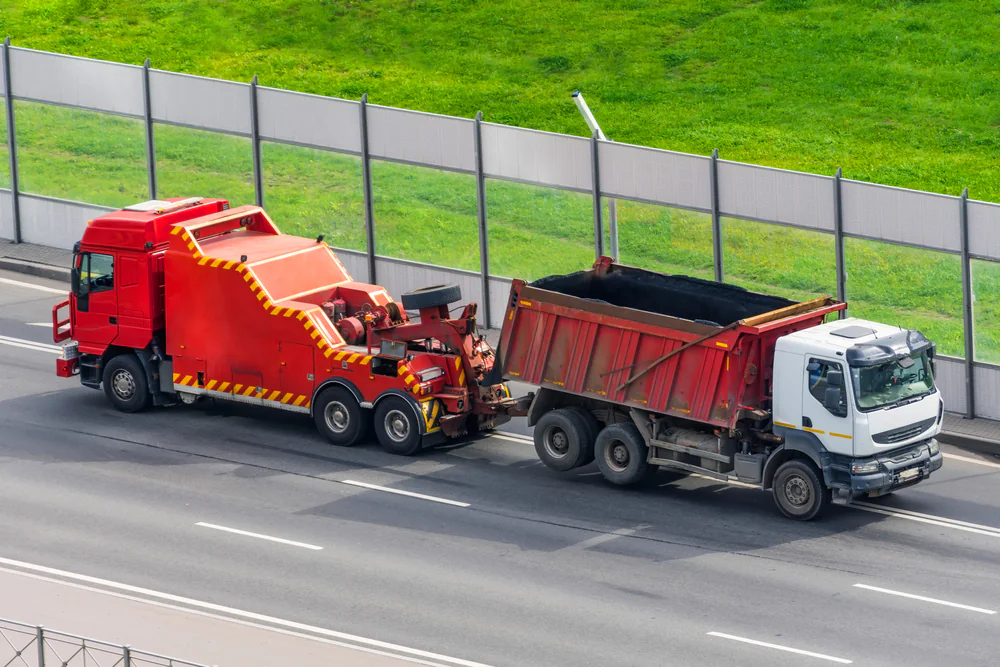
What Separates Reliable Roadside Assistance Companies From the Rest
The gap between a reliable roadside vendor and an unreliable one isn’t always obvious from a website. Every company in this space claims to be fast, available around the clock, and fully equipped. The ones that actually deliver on those claims tend to share a few specific traits that are easy to verify before you ever need them.
Credentials are the first filter. ASE certification for medium and heavy trucks — specifically the Master Medium/Heavy Truck designation — is the industry’s gold standard. It requires passing a series of rigorous exams covering every major system on a Class 4 through Class 8 vehicle, plus documented hands-on experience. It’s not a rubber stamp. Technicians have to retest every five years to maintain it. When a vendor says their mechanics are ASE-certified truck masters, that’s a verifiable claim, not a marketing line. Ask for it.
Parts inventory is the second filter, and it’s one most fleet managers don’t think to ask about until they’ve been burned. A mobile technician who shows up without the right parts doesn’t fix your truck — they assess it, leave, and come back later. For a fleet running on tight delivery windows, that’s a half-day problem at minimum. The vendors worth keeping on your approved list stock the parts most likely to cause a breakdown: tires, batteries, drive-shafts, and other high-failure components. If a vendor can’t tell you what they carry on their service trucks, that’s your answer.
Pricing transparency is the third filter, and arguably the most important one from a cost-management standpoint. Research from the American Transportation Research Institute found that 82.7% of motor carriers have experienced excessive towing rates, and 81.8% have encountered unwarranted additional charges. The average towing invoice in their analysis came in at $11,681 — and in predatory billing situations, that number climbed to $18,154. A vendor who commits to flat-rate pricing with no after-hours surcharges, and whose estimates consistently match their final invoices, is not just being fair — they’re the exception in this industry.
Does Your Current Vendor Actually Answer at 3 AM? Here's How to Find Out
“24/7 availability” is the most overused phrase in the roadside assistance industry. It appears on virtually every vendor’s website, and it means almost nothing on its own. What it often means in practice is a voicemail box, an answering service that takes a message and calls back during business hours, or a dispatch line that connects to whoever is on call — which may or may not be a qualified technician for your type of vehicle.
The only way to know if a vendor’s 24/7 claim is real is to test it before you need it. Call after hours. Call on a Sunday morning. Call on a holiday. If a real person answers and can dispatch a qualified technician to your location, that vendor belongs on your list. If you get a recording, you’ve learned something valuable at no cost.
This matters more in Wayne County, MI than it might in a less commercially active market. The freight doesn’t stop moving because it’s 6:30 AM on a Sunday in January. The I-94 corridor through Detroit carries commercial truck traffic that makes up a significant share of average daily volume on that stretch of highway. The I-75 and I-96 corridors through the county are equally active. Breakdowns don’t schedule themselves around business hours, and neither should your vendor.
There’s also the question of who answers. A national dispatch network that routes calls through a call center and sends whoever is available is a different product than a local operator where a real person who knows the area picks up the phone and dispatches a technician who has been working these corridors for decades. The latter knows the difference between an I-75 breakdown near the Ambassador Bridge corridor and one near the airport in Romulus. That local knowledge shortens response time in ways that are hard to quantify but easy to feel when your driver is standing on the shoulder at 7 degrees.
Commercial Truck Roadside Assistance: What Heavy-Duty Fleets Specifically Need
Not every roadside vendor is equipped for heavy-duty commercial vehicles, and the difference between a vendor who is and one who isn’t becomes very clear when a loaded semi goes down on the side of I-275 near Romulus.
Heavy-duty roadside assistance requires specialized equipment, technicians trained on Class 6 through Class 8 vehicles, and the capacity to handle repairs that simply can’t be done with a standard service truck. That includes brake work, trailer repairs, reefer unit issues, welding, and drivetrain problems. A vendor who handles passenger cars and light trucks during the week and picks up a few semi calls on the side is not the same as a vendor whose entire operation is built around commercial vehicles.
If your fleet includes semis, trailers, or construction equipment, your vendor list needs to reflect that — and it needs to be confirmed, not assumed.

Box Truck Roadside Assistance: Why Mixed Fleets Need One Vendor Who Can Handle Both
A lot of fleet managers in Wayne County, MI are running mixed fleets — semis and box trucks, or service vans alongside flatbeds. The challenge with a mixed fleet is that the roadside needs aren’t uniform. A box truck running deliveries through Dearborn has different breakdown risks than a refrigerated semi hauling produce on I-94. But maintaining separate vendor relationships for light-duty and heavy-duty vehicles creates its own headaches: multiple contacts, multiple pricing structures, multiple unknowns when a driver calls in a breakdown and you’re not sure which vendor to call.
The cleaner solution is a vendor who handles both. Box truck roadside assistance — covering vehicles under 10,000 lbs — and heavy-duty commercial truck assistance for semis and trailers are not the same service, but they don’t have to come from two different vendors. When a single provider is equipped and certified for both weight classes, your approved vendor list gets simpler and your drivers always know who to call regardless of what they’re driving.
This is worth asking about specifically when you’re vetting vendors. “Do you handle both light-duty and heavy-duty vehicles?” is a quick question that tells you a lot. A vendor who only works one end of the weight spectrum is useful in some situations and useless in others. A vendor who covers the full range is useful every time.
It’s also worth thinking about the types of repairs that come up most often with box trucks: tire failures, battery issues, lockouts, and fuel problems. These are quick fixes when the technician has the right parts on the truck. When they don’t, what should be a 20-minute roadside call turns into a tow and a half-day wait. Ask your vendor what they carry. The answer tells you more than any claim on their website.
Why Wayne County Conditions Make Vendor Selection More Consequential Than Most Markets
Wayne County, MI is not a typical commercial vehicle market, and the roadside assistance decisions you make here carry more weight than they might elsewhere. The combination of high commercial vehicle density, notoriously poor road conditions, severe Michigan winters, and proximity to critical supply chain infrastructure makes a breakdown in this county a more consequential event than the same breakdown somewhere else.
Michigan’s roads are hard on vehicles year-round. The freeze-thaw cycles that hit Wayne County every winter don’t just damage pavement — they cause the kind of pothole and road debris damage that leads to tire failures, wheel damage, and suspension problems at a higher rate than you’d see in a market with better infrastructure. Spring thaw brings its own set of problems, including seasonal weight restrictions on secondary roads that push heavier commercial traffic onto primary corridors like I-75, I-94, and I-96. More trucks, more wear, more breakdowns concentrated on the same stretches of highway.
Winter conditions add another layer. Battery failures, diesel fuel gelling, and frozen air lines are real, recurring problems for fleets operating in Wayne County from November through March. A roadside vendor who has never dealt with a breakdown in 7-degree weather is a different resource than one who has been handling exactly that scenario for over forty years in this market. Local experience isn’t just a nice-to-have — it’s a practical advantage when the conditions are genuinely difficult.
Then there’s the supply chain dimension. Wayne County sits at the center of Michigan’s automotive manufacturing network. Ford’s Dearborn campus, the Tier 1 and Tier 2 suppliers scattered throughout the county, and the cross-border freight running through the Ambassador Bridge corridor all depend on commercial vehicles moving on time. A breakdown carrying just-in-time parts to an assembly line isn’t just a transportation problem — it can ripple through a production schedule. The downtime cost per truck runs between $448 and $760 per day by industry estimates, and that’s before you factor in the downstream impact of a missed delivery window in a just-in-time supply chain. In this market, the vendor you have on your approved list matters more than almost anywhere else.
How to Choose a Fleet Roadside Assistance Provider in Wayne County, MI
The right time to choose your roadside vendor is right now — not when a driver is standing on the shoulder of I-94 at midnight with a broken-down semi. The vendors worth keeping on your approved list are the ones who answer the phone after hours, carry the parts to fix the problem on-site, charge the same rate regardless of when you call, and have the credentials to back up what they claim.
Every fleet manager in Wayne County, MI is eventually going to need this call. The difference between a 30-minute fix and a two-day ordeal usually comes down to whether the right number was already saved.
If you’re building or updating your approved vendor list, we’re here to help. Call J&J Truck & Trailer Repair at 313-999-3088 — before you need us, not after.