You’re on the shoulder of I-94 somewhere between Romulus and Detroit. The hazards are on. You’ve already called one number and got a hold music loop that eventually dropped. Now you’re searching again, hoping this time someone actually answers — and actually shows up.
That’s the moment this page is written for. Not the panic, but the preparation before it. Because the drivers who handle breakdowns best aren’t lucky — they already knew who to call. Here’s what truck roadside assistance actually involves, what to expect from the moment you dial to the moment you’re moving again, and what separates a provider worth saving in your phone from one that wastes your time.
What Tractor Trailer Roadside Assistance Actually Covers
There’s a common assumption that roadside assistance for a semi works like a consumer auto club — you call, someone shows up, they handle it. The reality is more variable than that. What you actually get depends entirely on who you called.
Quality truck roadside assistance covers far more than a jump-start or a tire swap. A capable mobile unit should be able to diagnose electrical faults, repair or replace brakes, handle fuel delivery, address air line issues, and perform mechanical repairs on-site — without defaulting to a tow every time something goes wrong. For tractor-trailer operators, that also means trailer repairs, not just the cab. Refrigeration units, hydraulic hoses, and trailer-specific problems are part of the job, not add-ons.
The goal of real roadside service is to fix the truck where it sits. Towing is a last resort, not a first response.
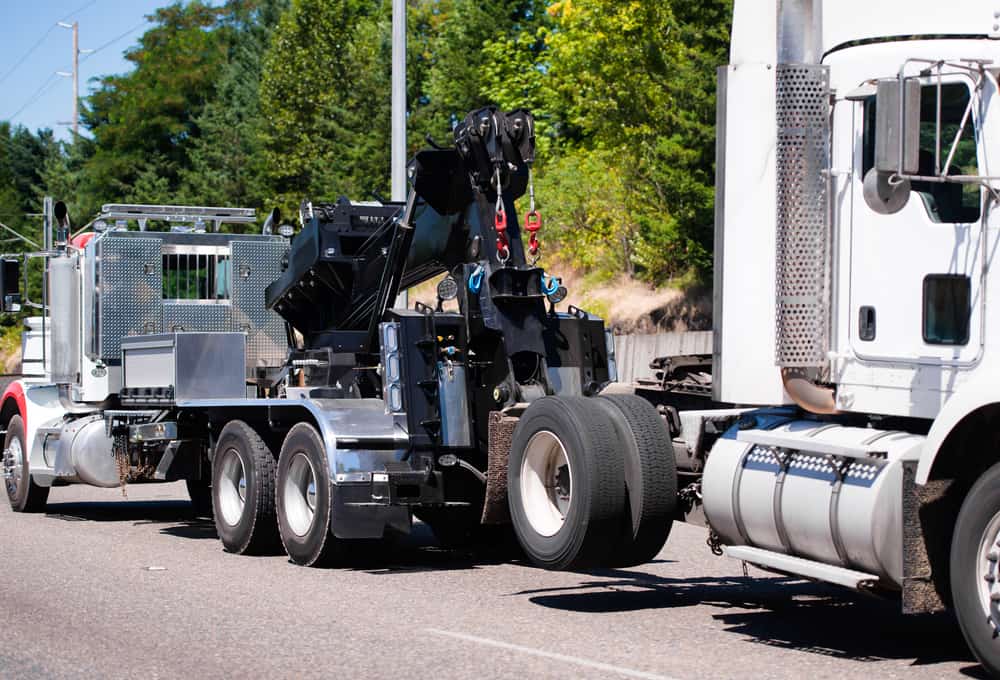
Why the "Referral Middleman" Problem Costs Wayne County Drivers Hours
Here’s something most drivers learn the hard way: a lot of national roadside assistance programs are not service providers. They’re call centers. You dial in, someone takes your information, and then they start searching for a local shop or tow company willing to take the job. Meanwhile, you’re sitting on the side of I-75 in January watching the temperature drop.
Drivers on trucking forums have documented waits of three to six hours under exactly this model — not because no one cared, but because the program they paid for was never built to dispatch anyone directly. It was built to connect you with someone who might.
The difference between that and a direct-dispatch local provider is the difference between a phone tree and a person who picks up, knows the roads you’re on, and sends a truck from a shop that’s already stocked with the parts you’re likely to need. Wayne County’s freight corridors — I-75, I-94, I-96, I-275 — see tens of thousands of commercial trucks every single day. Breakdowns on those roads aren’t rare events. A provider worth calling has a real system for reaching you fast, not a subcontractor search that starts after you hang up.
There’s also the parts question, which doesn’t get enough attention. Even when a mobile mechanic arrives quickly, if they don’t carry the right components, the truck still doesn’t move. Drive-shafts, transmissions, tires, rims — having those on hand isn’t a luxury, it’s what turns a two-hour breakdown into a thirty-minute one. One of our customers put it simply: they were in and out faster than it took to find us online.
That’s the standard worth holding providers to. Not just “do they answer” but “do they show up ready.”
What Happens From the Moment You Call to When You're Moving Again
Most roadside assistance pages list services. Very few explain the actual sequence — what you should expect to happen, in order, from first contact to back on the road. Here’s how it should go with a provider who’s actually set up to help.
You call. Someone answers — not a voicemail, not a callback form, not a scheduling queue. You describe the situation: what you’re driving, where you are, what happened. A good provider asks the right questions here, because the goal is to arrive with the right equipment and the right parts, not to assess the situation and then go find them.
From there, you get a realistic arrival window. Not a vague “we’ll be there as soon as we can,” but an actual timeframe you can plan around. For drivers running tight schedules in Wayne County’s automotive supply corridor — where a late delivery can ripple into a missed reload and a tightening HOS window — that clarity matters.
When the technician arrives, the first priority is diagnosing the problem accurately. This is where credentials make a real difference. A mechanic running computer diagnostics on a Cummins or Detroit Diesel engine is solving a different kind of problem than someone doing a visual check. The depth of that diagnosis determines whether the repair sticks or whether you’re calling again fifty miles down the road.
If the repair can be done roadside — and in most cases, it can — you get an estimate before work begins. That estimate should match what you pay. One thing we hear consistently from drivers who’ve worked with us is that the number they heard at the start was the number on the invoice. No surprises after the fact.
When the job is done, you leave. That’s the whole point. Not a tow to a shop you didn’t choose, not a wait for parts that weren’t on the truck, not a callback tomorrow. You get back on the road.
Roadside Service for Semi Trucks in Wayne County: Why Local Matters
Wayne County, MI isn’t a generic freight market. The Ambassador Bridge alone handles roughly 2.5 million commercial truck crossings a year — making it the busiest commercial border crossing in the country. Add the automotive manufacturing operations headquartered here (GM, Ford, Stellantis) running on just-in-time logistics, and a stranded truck isn’t just an inconvenience. It can stop an assembly line.
That context changes what “fast service” actually means. It also changes what you need in a provider — someone who knows these roads, runs in this weather, and understands that the clock on a missed delivery window started the moment your truck stopped moving.

Does Michigan Winter Change What You Need From a Roadside Provider?
The short answer is yes, significantly. Michigan winters create a specific set of breakdown conditions that providers who only work in mild climates simply aren’t prepared for. Diesel fuel gels in sustained cold. Air brake lines freeze. Batteries that were marginal in October fail completely in January. And Wayne County’s freeze-thaw road cycles — the same ones responsible for the state’s notorious pothole problem — put real stress on tires and suspension components throughout the season.
We’ve responded to calls at 6:30 in the morning on Sundays in seven-degree temperatures, forty miles out. That’s not an edge case in this market — it’s a normal winter weekend. A provider that says they’re available around the clock but has never actually been tested by a Michigan February isn’t the same as one that has.
For drivers hauling temperature-sensitive freight, winter also raises the stakes on trailer refrigeration issues. A Thermo-King or Carrier unit that malfunctions in January isn’t just a mechanical problem — it’s a load at risk. Roadside service that covers the trailer, not just the tractor, is the difference between saving the load and losing it.
When you’re evaluating a provider, ask specifically whether they handle trailer repairs, refrigeration systems, and cold-weather mechanical issues. The answer tells you a lot about whether they’ve actually been doing this in Michigan or just say they have.
What Qualifications Should a Semi Roadside Assistance Mechanic Actually Have?
This is a question most drivers don’t think to ask until after they’ve had a bad experience. Someone shows up, looks at the truck, can’t fix it, and calls a tow anyway — at which point you wonder what the point of the service call was.
The mechanic’s qualifications are the single biggest variable in whether a roadside repair actually gets done. ASE Master Mechanic certification is the benchmark — it’s the highest tier in the industry and requires demonstrated competency across the full range of truck systems. It’s what major national truck service chains require of their technicians, and it’s what you should expect from anyone working on a Class 8 vehicle on the side of I-94.
Beyond certification, there’s the question of diagnostic capability. Modern semi trucks — whether they’re running Cummins, CAT, Detroit Diesel, or Mercedes powerplants — require computer diagnostics to identify faults accurately. A mechanic who relies on visual inspection alone is working with incomplete information. Mobile units equipped with diagnostic computers can identify the actual fault code, not just the symptom, which means the repair addresses the real problem.
We’re led by Dr. Phillip Marin, who holds three doctoral degrees — in Diesel Engineering, Drivetrains, and Metal Alloys. That’s an unusual combination of academic credentials in a trade-skills industry, and it reflects a depth of mechanical knowledge that goes well beyond what most roadside providers bring to a call. Paired with ASE Master Mechanic certification and more than forty years serving Detroit’s trucking community, it means the person arriving at your truck has spent a career understanding exactly what goes wrong with commercial vehicles and why.
For owner-operators who’ve invested everything in their rig, that’s not a small thing. It’s the difference between a repair that holds and one that doesn’t.
How to Choose the Right Truck Roadside Assistance Before You Need It
The drivers who handle breakdowns best are the ones who made a decision before they were stranded. They saved a number. They knew what the provider covered. They weren’t starting from scratch at 3 AM on the shoulder of I-275 in February.
What to look for: a direct-dispatch operation (not a referral service), a mechanic with verifiable credentials, parts on the truck, transparent pricing, and genuine around-the-clock availability — not just a phone that rings. For Wayne County drivers specifically, add cold-weather experience and trailer coverage to that list.
If you want a provider that checks all of those boxes, J&J Truck & Trailer Repair is based in Detroit and has been running calls across Wayne County for over forty years. Save the number — 313-999-3088 — before you need it. That’s the whole point.