You’re pulled over on the shoulder of I-94 somewhere between Romulus and Taylor. Hazards on, triangles out, clock running. You need help, and you need it from someone who actually knows what they’re doing. The problem is, not every mechanic who shows up for a roadside call is qualified to work on a commercial diesel — and in a county where freight never really stops moving, the wrong call can cost you far more than the service fee. This post explains exactly why diesel specialization matters, what separates a real specialist from a generalist, and how to make sure you’re not paying twice for a problem that should’ve been fixed the first time.
What Heavy Duty Roadside Service Actually Requires
Heavy-duty roadside service isn’t a scaled-up version of what a general auto mechanic does. It’s a completely different discipline. Diesel engines operate on compression ignition — no spark plugs, no ignition coil, none of the systems a gasoline-trained mechanic spends years learning. The fuel injection systems on modern diesels run at pressures exceeding 30,000 PSI. For context, gasoline direct injection systems operate somewhere between 2,000 and 3,000 PSI. That’s not a minor difference in scale — it’s a fundamentally different machine.
When a generalist mechanic pulls up to your Freightliner or Peterbilt on the side of I-75, they may be working with a generic OBD-II scanner that can’t read manufacturer-specific fault codes. They’re guessing at the root cause based on training that was never designed for this type of engine. And when they guess wrong, you pay for it — in parts that didn’t need replacing, in time lost waiting for a second call, and in downtime costs that add up fast.
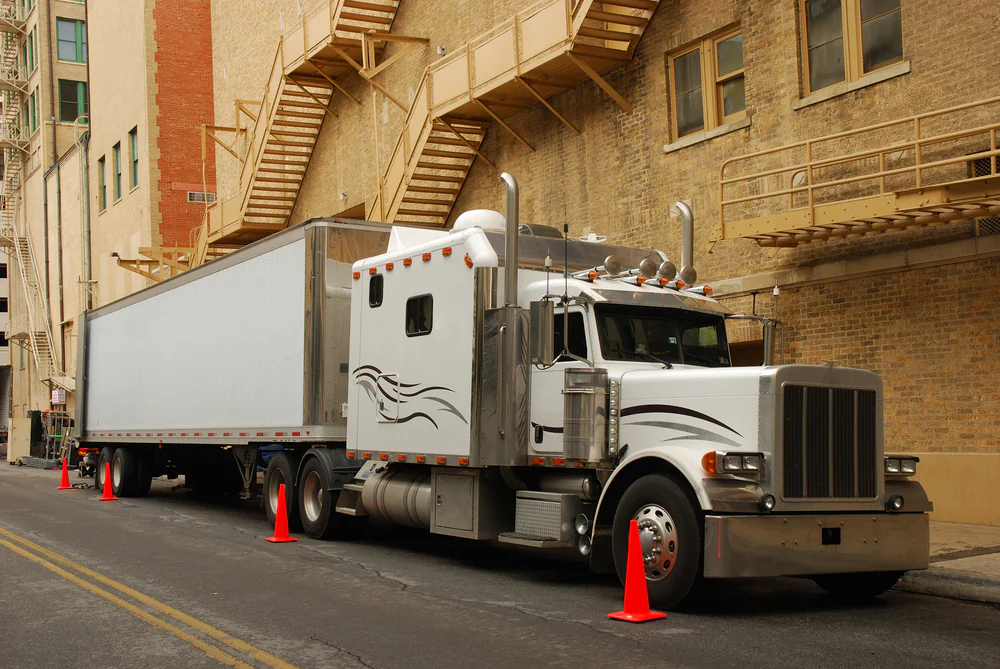
Heavy Duty Roadside Assistance: Why the Right Diagnostic Tools Change Everything
One of the most overlooked differences between a diesel specialist and a generalist is what they’re carrying when they pull up behind your truck. A proper heavy-duty roadside assistance provider brings make-specific diagnostic computers — tools built to communicate with the proprietary electronic control systems on platforms like Kenworth, Volvo, International, and Mack. A generic scanner might pull a generic fault code. A make-specific tool tells you exactly what’s happening and where.
This matters because commercial trucks have layers of electronic systems that don’t exist on passenger vehicles. ABS modules, aftertreatment systems, electronic unit injectors, air management systems — these components generate fault codes that only show up correctly on the right equipment. A mechanic without that equipment isn’t just less efficient. They’re working partially blind.
Here’s where the financial reality hits hard. Industry data shows that nearly 40% of diesel engine issues are misdiagnosed when handled by non-specialized mechanics. That means close to half the time a generalist works on a diesel, the actual problem doesn’t get fixed. The driver pays for labor and parts, gets back on the road, and breaks down again — sometimes within miles. Then they’re back on the phone, back on the shoulder, and back paying for another service call. The original repair cost is now the first of two or three bills.
For an owner-operator running freight in Wayne County, where operational costs run around $90.89 per hour according to ATRI’s 2024 data, that kind of delay isn’t just frustrating. It’s a direct financial hit. A truck sitting idle for even four hours while a misdiagnosis gets sorted out represents a real and measurable loss — and that’s before you factor in cargo commitments, delivery windows, or the cost of getting towed to a shop if the roadside repair fails.
The right diagnostic equipment, in the hands of someone trained specifically on diesel systems, is what prevents that second call from ever happening. It’s not about having fancier gear for its own sake. It’s about getting the diagnosis right the first time so the repair actually holds.
Can a Regular Mechanic Work on a Semi Truck? What Wayne County Drivers Should Know
Technically, there’s no law that prevents a general mechanic from attempting to work on a semi truck. But technically and practically are two very different things. Diesel engines run at compression ratios between 14:1 and 25:1. Gasoline engines typically operate between 8:1 and 12:1. The entire combustion process, the fuel delivery architecture, the cooling demands, the torque loads — none of it translates directly from one to the other. A mechanic trained on gasoline engines isn’t just less experienced with diesels. They’re trained on a different system.
The ASE — the National Institute for Automotive Service Excellence — recognizes this distinction clearly. Their medium and heavy truck certification series covers eight separate test areas specific to Class 4 through Class 8 vehicles: diesel engines, drivetrains, brakes, electrical systems, suspension, HVAC, preventive maintenance, and auxiliary power systems. Passing all eight earns the designation of ASE Certified Master Medium/Heavy Truck Technician. It also requires two years of verified real-world experience before a technician can even sit for the exams. That’s the baseline for what genuine diesel specialization looks like in a credentialed form.
Wayne County’s roads make this more than an academic question. The county handles some of the highest commercial truck traffic volumes in the Midwest. I-75 between Detroit and Toledo sees roughly 15,500 trucks per day. I-94 through Romulus and Taylor sees around 14,300. The Ambassador Bridge in Detroit — the busiest commercial land border crossing in North America — accounts for nearly 2.5 million truck crossings per year. These aren’t just statistics. They describe the daily reality of freight moving through this county, and the frequency with which breakdowns happen on these corridors.
Michigan’s roads add another layer. Wayne County’s streets and interstates take a serious beating from freeze-thaw cycles every winter. Potholes, uneven pavement, and road debris are constant hazards for heavy vehicles, and the damage they cause — blown tires, suspension failures, undercarriage problems — requires someone who understands what they’re looking at on a Class 7 or Class 8 truck. A generalist mechanic who mostly works on pickup trucks and passenger cars hasn’t spent their career learning to diagnose those systems under field conditions.
What Real Roadside Truck Repair Looks Like in the Field
A proper roadside truck repair call isn’t just showing up with a toolbox and a willingness to try. It means arriving with the right equipment, the right parts, and the experience to make a correct diagnosis under pressure — on the side of a highway, in whatever weather Wayne County decides to throw at you that day.
Our mobile units are stocked with compressors, welding equipment, and make-specific diagnostic computers. We carry drive-shafts, brake components, tires, rims, and most common parts on the truck — because a repair that requires a parts run isn’t a roadside repair, it’s a delay. When we pull up behind your truck, the goal is to fix it there, not to assess it and schedule something for later.

What Should I Do When My Semi Truck Breaks Down on a Wayne County Highway?
The first few minutes after a breakdown matter a lot, both for your safety and for how quickly you get back on the road. If you lose power or experience a mechanical failure on I-94, I-75, I-96, or I-275, get the truck as far off the travel lane as possible — onto the shoulder or an exit ramp if you can reach one safely. Put your hazard lights on immediately and set out your warning triangles or flares behind the vehicle. Michigan law requires them, and they genuinely save lives on high-speed corridors.
Once you’re safely positioned, assess what you can without putting yourself in danger. Note any warning lights that were on before the failure, any unusual sounds or smells in the moments leading up to it, and whether the truck lost power gradually or suddenly. That information helps a qualified mechanic diagnose the problem faster when they arrive — and faster diagnosis means faster repair.
Then call someone who actually knows diesel systems. Not just the first number that comes up in a search, but a provider who can tell you — specifically — that they’ve worked on your make and model before, that they carry the right diagnostic equipment, and that they stock common parts on their mobile unit. Ask those questions directly. A specialist will answer them without hesitation.
We’ve taken calls at 6:30 in the morning on Sundays. We’ve gone out in seven-degree weather, 40 miles from our shop, because a driver needed help and no one else was answering. True 24/7 availability isn’t a marketing line — it’s the baseline expectation for a business that serves commercial drivers in Wayne County. And we don’t charge extra for nights, weekends, or holidays. The rate you’re quoted is the rate you pay. One of our customers put it plainly: the estimate matched the final price. That’s how it should work.
For refrigerated loads, time is an even more urgent factor. A reefer unit failure in a Wayne County summer — or a heating failure in a Michigan January — can compromise cargo within hours. We handle Carrier and Thermo King units and carry the equipment to address reefer problems on-site. Waiting until morning isn’t always an option, and it shouldn’t have to be.
How Long Does Mobile Truck Repair Actually Take?
The honest answer is that it depends on the problem — but the more useful answer is that with the right mechanic, far more repairs get resolved on-site than most drivers expect. Standard repairs, when the diagnosis is correct and the parts are on hand, can be completed in 30 minutes or less. That’s not a promise about every job, but it’s a documented outcome from our customers, and it reflects what’s possible when the mechanic arriving at your truck already knows what they’re doing.
The repairs that take longer are usually the ones where the first call went to the wrong provider. A misdiagnosis adds hours — sometimes a full day — to the total time a truck is out of service. The mechanic replaces something, the driver gets back on the road, the problem resurfaces, and now the whole process starts over. That cycle is where downtime costs really accumulate. At $1,000 to $2,000 per day in total downtime costs for a commercial truck, a misdiagnosis isn’t a minor inconvenience. It’s a significant financial event.
The reason we’re able to resolve most problems at the roadside comes down to preparation and expertise working together. Our team, led by someone with three Ph.D. degrees — in Diesel Engineering, Drivetrains, and Metal Alloys — represents decades of study and application in the exact three systems most likely to be involved when a commercial truck breaks down. Combined with ASE Master Mechanic certification and over 40 years working in Detroit’s trucking community, that depth of knowledge is what makes a 30-minute roadside repair possible rather than exceptional.
Wayne County’s freight environment doesn’t leave much room for error. Whether you’re moving automotive parts between Dearborn and a Canadian supplier across the Ambassador Bridge, hauling out of a distribution center near DTW in Romulus, or running a construction equipment load through the county, your truck going down isn’t just your problem — it’s a ripple through a supply chain. The faster and more accurately the repair gets made, the less damage that ripple does.
We’ve been doing this work in Detroit and Wayne County for a long time. We know these roads, we know the conditions, and we know what breaks on commercial trucks running these corridors in Michigan winters and construction-season summers. That familiarity isn’t something you can replicate by dispatching a general mechanic from a national network.
Who to Call for Roadside Truck Repair in Wayne County, MI
When your truck goes down on a Wayne County highway, the decision you make in the next five minutes has real financial consequences. A specialist with the right tools, the right training, and the right parts on their truck can get you back on the road the same day. A generalist who guesses at a diesel diagnosis can cost you a day or more of downtime — and a second repair bill on top of the first.
Diesel specialization isn’t a preference. It’s the difference between a repair that holds and one that doesn’t. The 40% misdiagnosis rate among non-specialists isn’t an abstract statistic — it’s the reason so many drivers have a story about paying for a roadside call that didn’t fix anything.
If you’re in Wayne County and you need roadside truck repair from a team that has spent decades working on commercial diesels — not just vehicles in general — reach out to J&J Truck & Trailer Repair at 313-999-3088. We’re available 24/7, we come to you, and we don’t charge more because it’s a Sunday night in January. Call us before you need us, or call us right now.