A tire blowout on a loaded semi is one of those moments where everything narrows down fast. You’re managing the wheel, watching your mirrors, trying to get safely off the road — and before the dust even settles, you’re already thinking about what comes next. Who do you call? How long will this take? What’s it going to cost?
Most drivers default to calling a tow truck. It feels like the obvious move. But for a lot of tire emergencies in Wayne County, especially on the I-94 and I-75 corridors, it’s actually the slower and more expensive option. Here’s what you should know before you make that call.
What to Do in the First 60 Seconds After a Semi Truck Tire Blowout
The first thing a blowout will try to do is panic you into overcorrecting. Don’t. Grip the wheel firmly, ease off the accelerator, and let the truck slow down on its own — don’t hit the brakes hard. Keep it straight, signal, and guide the vehicle to the shoulder as gradually as you can manage.
Once you’re stopped, hazards on, set your warning triangles behind the vehicle at the distances required by DOT — not just one triangle, and not right behind the bumper. Then step away from the traffic side. Only after all of that do you reach for your phone.
Why Wayne County Roads Make Blowouts More Likely Than You Think
If you run freight through Wayne County regularly, you already know the roads. The freeze-thaw cycles Michigan goes through each winter don’t just cause potholes — they cause the kind of sustained road surface damage that puts real stress on commercial tires every single trip. By spring, stretches of I-75 through the downriver corridor and sections of I-94 near the airport approach in Romulus can look like they’ve been through a warzone.
Pothole impacts on a loaded trailer aren’t just a nuisance. A sudden sidewall strike at highway speed can destroy a tire that was holding pressure fine five seconds earlier. It doesn’t have to be visibly damaged before the hit — the impact itself does it. That’s not a maintenance failure. That’s Wayne County in March.
Underinflation compounds the problem. Even running 10 to 20 PSI below spec generates enough heat buildup in the tire’s structure to cause catastrophic failure — and that’s at normal operating speeds. The preventable blowouts almost always trace back to pressure, inspection gaps, or road impact damage that wasn’t caught in time.
The I-94 corridor through Wayne County carries some of the heaviest commercial freight volume in the state. Trucks hauling automotive parts to the Ford Dearborn complex, time-sensitive air cargo feeding DTW in Romulus, cross-border loads routing to the Ambassador Bridge via I-75 — these are not trips where you can afford to sit on the shoulder for four hours waiting for a tow truck to work through its queue.
That context matters when you’re deciding who to call.
Should You Drive to the Nearest Semi Truck Tire Shop After a Blowout?
Short answer: no. Once a commercial tire has blown or lost significant structural integrity, driving on it — even slowly, even for a short distance — risks damaging the rim, the brake components, and potentially the axle. It also creates a real hazard for other drivers on the road around you. The tire is done. The question now is how you get it dealt with, not how far you can limp the truck.
This is where a lot of drivers make a decision that costs them more time and money than it should. The instinct is to call a tow truck and get the rig to a shop. That’s not wrong — sometimes it’s the right call. But it’s not automatically the right call for every tire emergency, and understanding the difference can save you hours and a significant chunk of your day’s earnings.
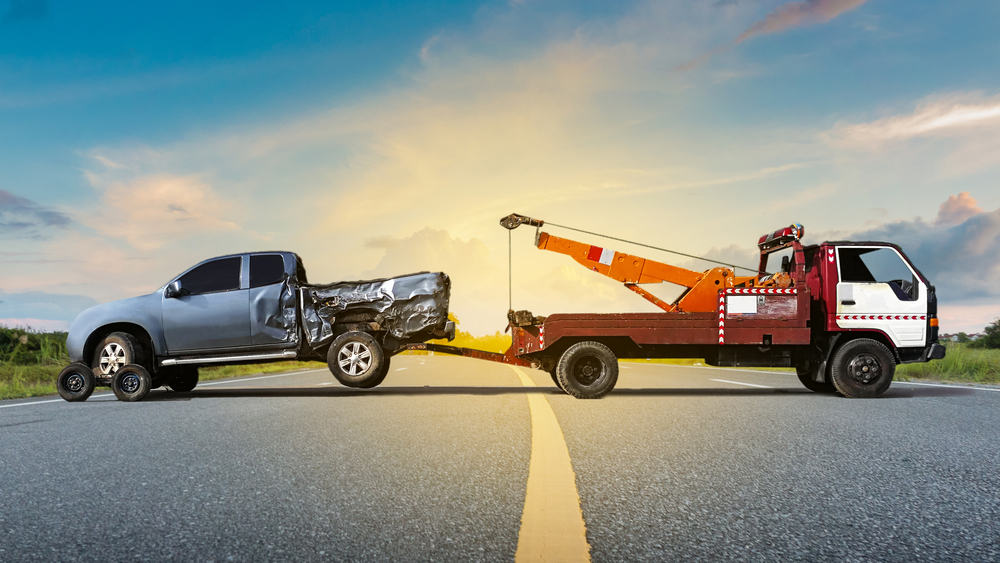
A tow on a heavy commercial vehicle in Wayne County isn’t a quick or cheap transaction. Base rates for semi-truck towing have climbed to $300–$500 locally, and that’s before mileage surcharges come into play. Add the shop’s intake queue — which on a busy day might mean your truck doesn’t get looked at until the following morning — and a tire problem that could have been fixed on the shoulder in under an hour has turned into an overnight situation.
Mobile truck tire repair exists specifically to short-circuit that chain. A qualified mobile technician comes to your location, assesses the tire on-site, and — if the damage is repairable or a replacement is needed — handles it right there. No tow. No shop queue. No second invoice on top of the first one.
How Mobile Truck Tire Repair Actually Works
Mobile repair isn’t a guy with a plug kit and a prayer. A properly equipped heavy-duty mobile technician arrives with commercial-grade jacks rated for the weight of a loaded semi, torque wrenches calibrated for lug nut specs, air compressors that can bring a commercial tire up to the pressures it actually needs, and — critically — tire inventory stocked for the most common commercial sizes.
That last part matters more than most drivers realize. The reason a lot of mobile calls turn into tows anyway is that the technician shows up without the right tire. That’s not how we operate. We stock the tires and rims most commonly needed for the trucks and trailers we service in Wayne County, which means when we arrive, we can usually resolve the situation in a single visit.

What a Semi Truck Tire Change on the Side of the Road Actually Involves
A roadside semi truck tire change on a highway shoulder is a different job than swapping a passenger car tire in a parking lot. The weight alone changes everything — a loaded commercial axle can run 20,000 lbs or more, and the equipment used to lift it has to be rated accordingly. The lug nuts on a commercial wheel are torqued to specifications that require calibrated tools, not a standard impact gun. Get that wrong and you’re creating a new problem instead of solving the old one.
When we arrive at a breakdown on I-94 or I-75, the first thing we do is assess whether the tire can be repaired on-site or needs a full replacement. A clean puncture in the tread area — nail, screw, road debris — is often repairable. A blowout that’s compromised the sidewall or bead area typically isn’t. We’ll tell you which one you’re dealing with, and we’ll tell you straight.
If a full replacement is needed, we pull the damaged tire, mount the replacement on the existing rim or swap the rim if that’s also damaged, torque everything to spec, inflate to the correct pressure for your axle load, and verify the repair before you pull back onto the road. The process is thorough because cutting corners on a commercial tire repair isn’t a risk worth taking for anyone involved.
One of our customers summed up what this looks like from the driver’s seat: the job was done in under 30 minutes from the time we arrived. That’s not a guarantee for every situation — damage varies, conditions vary — but it reflects what’s possible when the technician shows up with the right equipment and the right parts already on the truck.
Why the Same Rates Apply Whether It's 2 PM or 2 AM
Emergency roadside situations have a reputation for variable pricing — and it’s not entirely undeserved. When you’re stranded on the shoulder of I-275 at midnight with a blown steer tire and a delivery window closing, you don’t have a lot of negotiating leverage. Some providers know that and price accordingly.
We don’t. Our rates are the same regardless of the time of day, whether it’s a weekday or a weekend, whether it’s a holiday or a Tuesday in February. That’s a stated policy, not a marketing line. A customer who called us for an after-hours job put it plainly in a review: he got an estimate before we started, and the final invoice matched it. That’s how it should work, and that’s how it works here.
This matters more in Wayne County than it might in a lower-volume market, because freight doesn’t stop moving at 5 PM. The trucks running automotive parts to the Dearborn plants, the cargo carriers feeding DTW’s overnight operations, the cross-border loads staging for the Ambassador Bridge — they’re on the road at 3 AM as often as they’re on the road at noon. A tire emergency at any of those hours deserves the same response, at the same price.
We’re ASE Certified Truck Master Mechanics — the highest certification level available in the trade. Our lead mechanic, Dr. Phillip Marin, holds three Ph.D. degrees in Diesel Engineering, Drivetrains, and Metal Alloys. We’ve been doing this in Wayne County since 1999, on the same interstates, in the same conditions, for the same kinds of drivers.
Who to Call for Truck Tire Emergency Road Service in Wayne County, MI
If you take one thing from this: a blown semi tire doesn’t automatically mean a tow. For most tire emergencies — blowouts, sidewall damage, valve stem failures, bead leaks — a qualified mobile technician can resolve the situation on-site, faster and for less than the towing-and-shop route costs.
Wayne County’s freight corridors don’t forgive long downtimes. Whether you’re on I-94 near Romulus, on I-75 heading toward the bridge, or somewhere on I-96 between Detroit and Livonia, the goal is the same: get you assessed, get you fixed, and get you moving — without the tow bill and without the shop queue.
When you need truck tire emergency road service in Wayne County, MI, J&J Truck & Trailer Repair is available 24/7 at 313-999-3088. Same rates, any hour.