If your diesel truck has ever come back from a shop with the same problem it went in with, you’re not alone. It happens more than it should — and it almost always comes down to one thing: the mechanic treated your diesel engine like a gas engine. They’re not the same machine. They don’t fail the same way, they don’t get diagnosed the same way, and they definitely don’t get fixed the same way. Understanding that difference isn’t just useful — in Wayne County, where a broken-down truck on I-94 or I-75 can mean thousands of dollars in lost time, it’s essential.
What Makes Diesel Truck Repair Fundamentally Different
The core difference starts with how the engine runs. A gas engine uses spark plugs to ignite a fuel-air mixture. A diesel engine doesn’t have spark plugs — it compresses air so intensely that the temperature alone ignites the fuel. That’s called compression ignition, and it changes everything downstream: the pressures involved, the components that wear, the failure modes that appear, and the tools and knowledge required to diagnose them correctly.
Diesel fuel systems operate at pressures that would destroy a gas engine’s fuel system. The injectors alone — which meter fuel directly into the combustion chamber at extremely high pressure — can cost anywhere from $300 to $1,200 per unit to replace. Get the diagnosis wrong and you might replace injectors when the real problem is a failing turbocharger, or chase a fuel issue when the EGR valve is the actual culprit. These systems are interconnected in ways that make experience and training genuinely matter.
Why Diesel Engines Have More Maintenance Layers Than Gas
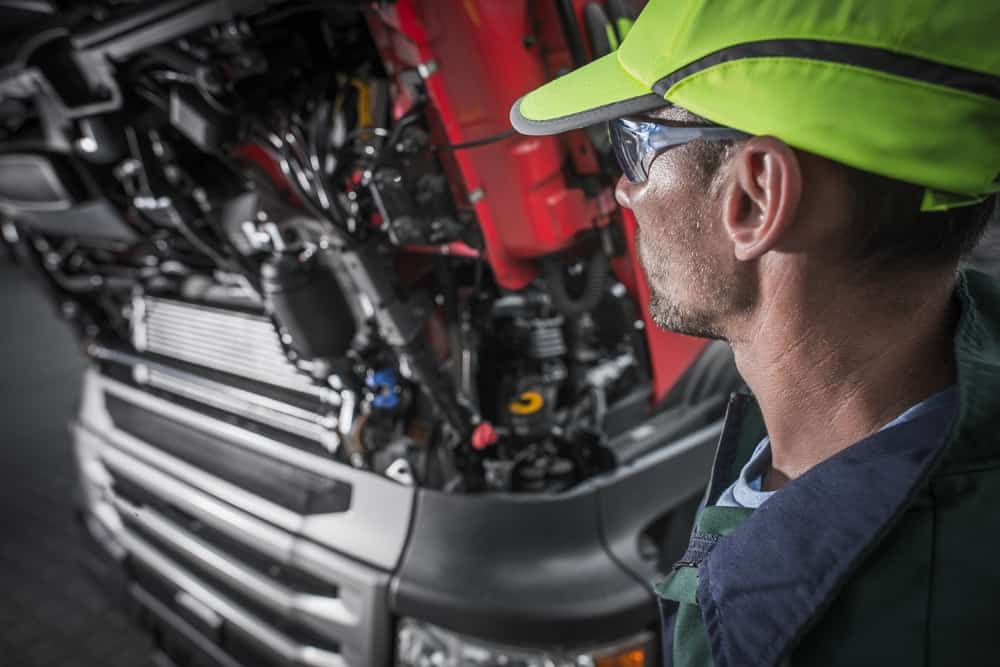
Diesel trucks are often praised for their longevity — and rightfully so. A well-maintained diesel engine can reach 300,000 to 500,000 miles. But that longevity comes with a maintenance profile that’s significantly more involved than what a gas engine requires, and skipping steps accelerates wear faster because the systems run at higher pressures and temperatures.
Fuel filters on a diesel need to be replaced approximately every 15,000 miles. That’s not optional — contaminated fuel reaching a high-pressure injection pump can cause catastrophic damage that dwarfs the cost of a filter change. Diesel particulate filters, which trap soot from the exhaust, need to be cleaned or replaced around every 100,000 miles. If you let a DPF go too long, the back-pressure it creates can damage the turbocharger and push problems into the engine itself.
Then there’s diesel exhaust fluid. Modern diesel trucks with selective catalytic reduction systems require DEF to be topped off roughly every 2,000 to 3,000 miles. It’s not just a fluid level — it’s tied to your emissions compliance. Run low and the truck will derate itself, limiting power until the system is satisfied.
None of this exists on a gas truck. A general mechanic who doesn’t work on diesels regularly may know these systems exist in theory, but knowing them well enough to diagnose a problem accurately is a different thing entirely. When something goes wrong in a DPF-equipped truck, the symptoms can look like a dozen different problems depending on how far along the issue has progressed. That’s why the person diagnosing it needs to understand the whole system, not just the part that’s visibly failing.
Can a Regular Mechanic Fix a Diesel Truck?
Technically, yes. Practically, it depends heavily on what’s wrong — and the stakes of getting it wrong are high enough that the question is worth taking seriously before you hand over the keys.
A general mechanic can handle straightforward work: oil changes, belts, basic brake service. But the systems that actually fail on diesel trucks — turbochargers, high-pressure fuel injection, EGR valves, DPF systems, SCR systems, compression diagnostics — require specialized equipment and training that most general shops don’t have. Diesel ECM diagnostics, for example, require software and interfaces specific to the engine manufacturer. Reading a Cummins fault code is not the same as reading a Paccar or Detroit Diesel fault code, and interpreting what that code actually means in context requires experience with that specific platform.
The ASE certification system recognizes this. There’s an entire separate Medium/Heavy Truck series (the T-Series) that covers diesel engines, drivetrains, brakes, suspension, and HVAC for Class 4 through Class 8 vehicles. Earning Master Truck Technician status means passing every test in that series — and roughly one-third of people who attempt ASE tests don’t pass on their first try. It’s a meaningful credential, not a rubber stamp.
At J&J Truck & Trailer Repair, our lead mechanic Dr. Phillip Marin holds three doctoral degrees — in Diesel Engineering, Drivetrains, and Metal Alloys — alongside ASE Master Truck Technician certification. That combination of academic depth and hands-on field experience is what separates a correct first diagnosis from a costly second guess. When you’re looking at $1,000 to $2,000 in lost revenue for every day your truck sits idle, the difference between a right diagnosis and a wrong one is not a minor detail.
Truck Frame Repair: A Diesel-Specific Problem in Wayne County
Diesel trucks put a different kind of stress on a frame than gas trucks do. The torque output is higher, the loads are heavier, and over time that stress concentrates in predictable places — frame rail joints, crossmember welds, areas around suspension mounting points. Add Michigan’s road conditions to the equation and the problem compounds quickly.
Wayne County roads are salted aggressively from November through March. That salt doesn’t just stay on the road surface — it works into every seam, joint, and crevice in a truck’s undercarriage. Frames that look solid from a distance can have corrosion eating through them from the inside out. It’s a problem specific to cold-climate markets like ours, and it’s one that southern-market mechanics may not fully appreciate.
How to Tell If Your Truck Frame Needs Repair
Frame damage isn’t always dramatic. You don’t need a collision to end up with a compromised frame — accumulated stress, corrosion, and overloading can all create structural problems that show up gradually. Knowing what to look for matters because a frame that’s ignored long enough becomes a safety issue, not just a repair issue.
The Truck Frame and Axle Repair Association sets a general threshold: frame distortion of more than one-quarter inch typically requires attention. In practice, that means watching for doors and cab panels that no longer align correctly, handling that feels off or pulls to one side under load, visible rust or cracking along the frame rails, and unusual flexing or creaking when the truck is loaded and moving.
Repairing a rusted truck frame typically runs in the range of $2,000 to $5,000 depending on how far the damage has progressed. A full frame replacement can exceed $10,000. The gap between those two numbers is almost always determined by how early the problem was caught.
This is where the metallurgy side of diesel truck repair matters in a way most people don’t think about. Welding a truck frame isn’t the same as welding a piece of pipe. High-strength steel alloys behave differently under welding heat — they can lose structural integrity if the weld is done incorrectly, creating a repair that looks solid but fails under load. Dr. Marin’s doctoral background in Metal Alloys directly informs how we approach frame repair: understanding how the material behaves, where to apply heat, and how to restore structural integrity without creating new stress points. That’s not something you can learn from a YouTube tutorial.
Frame straightening for moderate damage typically takes three to seven business days. Severe damage can extend that timeline to two or three weeks. Mobile assessment can help you understand what you’re dealing with before committing to a shop timeline — and in some cases, catch issues early enough that the repair is significantly simpler than it would have been otherwise.
Box Truck Repair: What Delivery Fleets in Wayne County Need to Know
Box trucks sit in an interesting middle ground. Depending on configuration, they may fall under light-duty or heavy-duty classification — and the diesel engines that power most commercial box trucks have all the same complexity and failure modes as their bigger semi-truck cousins, just in a package that sometimes gets treated as less critical.
In Wayne County, box trucks are everywhere. They’re running parts to the Ford River Rouge Complex, delivering to businesses along Michigan Avenue, moving freight out of distribution centers in Taylor and Westland, and supporting the last-mile logistics that keep the region’s supply chain moving. When one of those trucks goes down, the ripple effect is immediate.
The most common box truck failures we see are engine-related — fuel system issues, turbocharger wear, cooling system problems — along with clutch and transmission issues, suspension wear from heavy loading cycles, brake system maintenance, and electrical problems that can affect everything from cargo lift operation to the truck’s emissions compliance systems. The cargo door and lift gate systems on box trucks add another layer of mechanical complexity that a standard semi-truck repair shop may not be set up to handle.
What makes box truck repair particularly frustrating for fleet operators is the assumption that because the truck is smaller, it’s simpler. It’s not. A diesel-powered box truck has the same high-pressure fuel system, the same DPF and EGR complexity, and the same need for accurate ECM diagnostics as a Class 8 semi. The difference is that box trucks often get handed to general mechanics who aren’t equipped to handle those systems correctly.
We handle both heavy-duty vehicles over 10,000 pounds and light-duty vehicles under 10,000 pounds, which means we’re set up to work on box trucks regardless of where they fall on the weight spectrum. And because we’re mobile, we can come to your truck — whether it’s on the side of I-96, in a parking lot in Dearborn, or at your facility in Melvindale — rather than requiring you to arrange a tow and lose additional hours waiting for a shop bay to open up.
Finding a Qualified Diesel Truck Repair Provider in Wayne County, MI
The short version: diesel truck repair is its own discipline, and the person you call when something goes wrong should be able to prove they know it. That means specific credentials, real diesel diagnostic equipment, experience with your truck’s make and engine platform, and the ability to give you an accurate estimate before they start — not a surprise when they finish.
In a county where freight moves around the clock and downtime runs $1,000 to $2,000 a day, getting the diagnosis right the first time isn’t a luxury. It’s the job. We’ve been doing it across Wayne County for over 40 years, and we don’t charge extra for nights, weekends, or holidays — because trucks don’t break down on a schedule.
If you’ve got a diesel truck that needs attention, or you just want to talk through what you’re seeing before it becomes a bigger problem, call J&J Truck & Trailer Repair at 313-999-3088. A real person will answer.