If your rig has ever gone down on a Wayne County, MI interstate at an inconvenient hour — and let’s be honest, it’s always an inconvenient hour — you already know that calling the wrong towing company can cost you more time than the breakdown itself. A standard wrecker shows up, takes one look at your load, and you’re back to waiting. That’s not a hypothetical. It happens constantly on I-75, I-94, and I-96.
Heavy towing is its own category. The equipment is different, the training is different, and the outcome depends entirely on whether the company you called actually has what the job requires. Here’s what that really means — and what to look for before you make that call.
What Heavy Duty Towing Actually Requires
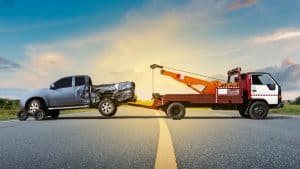
Standard tow trucks are built for passenger cars and light pickups. They’re not designed to handle loads over 17,000 lbs — and a loaded semi can tip the scales at 80,000. Sending one of those trucks to a commercial breakdown isn’t just ineffective; it can cause additional damage to the vehicle and create a safety hazard for everyone on the road around it.
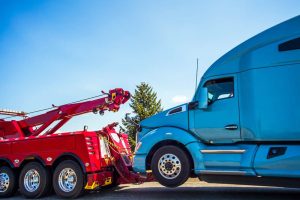
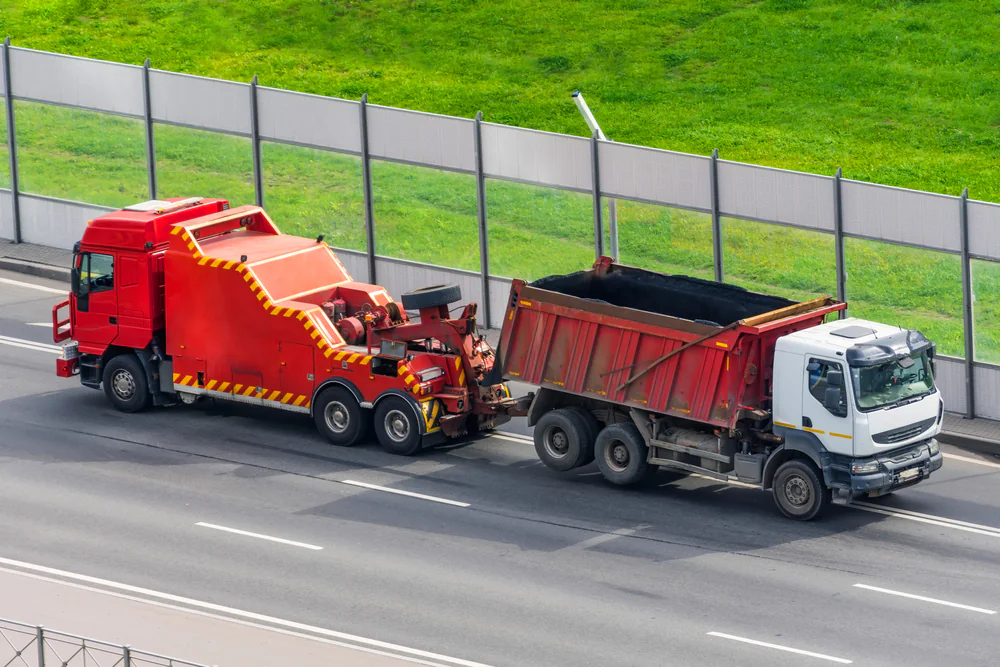
Heavy duty towing requires purpose-built equipment: heavy wreckers, specialized rigging, and in some cases rotator units capable of lifting up to 75 tons and rotating a full 360 degrees. That last piece matters when a vehicle has gone off the road, jackknifed, or ended up in a position where a standard pull simply won’t work.
The operator behind the wheel matters just as much as the truck itself. Recovery of an overturned tractor-trailer, for example, requires a minimum WreckMaster Level 7 certification — the highest tier in the industry’s hands-on training program. Getting the wrong equipment or an undertrained operator doesn’t just delay the job. It can make it worse.

24 Hour Roadside Assistance for Trucks: What the Right Call Looks Like
Here’s the scenario that plays out more than anyone wants to admit. A driver goes down on I-96 at 2 AM on a Saturday. They call the first towing number that comes up, get a voicemail, call a second number, get someone who says they’ll “be there in about two hours,” and then wait — dispatcher calling every fifteen minutes, load at risk, clock running.
The difference between a company that offers 24 hour roadside assistance for trucks and one that actually delivers it comes down to two things: who answers the phone and what they dispatch. A live person taking your call matters. But a live person who asks the right questions — what’s the vehicle, what’s the weight, what’s the situation — and then sends the right equipment is the whole ballgame.
We answer at 313-999-3088 around the clock. Not a voicemail. Not an answering service that pages someone. A person who takes your location, asks what you’re dealing with, and gets the right truck moving. Our response time is within minutes in most cases across Wayne County, MI — covering the full length of the major corridors including I-75, I-94, I-96, I-275, US-24, and M-10.
One more thing worth knowing: we don’t charge extra for night calls, weekend calls, or holiday calls. That policy is stated plainly and it doesn’t change based on when your rig decides to have a bad day. If you’ve dealt with after-hours surcharges before, you know how much that matters when you’re already in a stressful situation.
When a Heavy Tow Might Not Be the Answer at All
This is the part most towing companies don’t talk about, because their business model ends when the truck gets dropped at a shop. Ours doesn’t work that way.
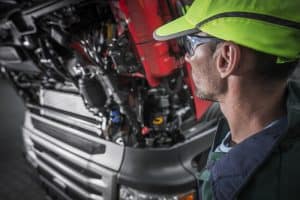
Our lead mechanic is Dr. Phillip Marin — and that title isn’t honorary. He holds three Ph.D. degrees: one in Diesel Engineering, one in Drivetrains, and one in Metal Alloys. When he rolls out to a breakdown, he’s not just there to hook up the truck. He’s there to diagnose what actually went wrong and, in most cases, fix it on the spot.
We stock drive-shafts, transmissions, engines, tires, rims, and most common parts on our mobile units — 99% of the time, what you need is already on the truck. That means a breakdown that looks like a multi-day ordeal can become a 30-minute roadside repair. One of our customers put it plainly in a review: we finished the job within 30 minutes, and the quality was excellent. That’s not unusual for us. It’s the goal on every call.
The reason this matters for heavy towing specifically is that commercial vehicles going down on Wayne County, MI’s interstates aren’t just inconvenient — they’re expensive. Every hour a Class 8 truck sits idle represents real lost revenue: missed deliveries, driver time, shipper penalties. If we can fix it roadside and get you rolling, that’s almost always the better outcome for everyone. We’ll tell you honestly when a tow is necessary. But we won’t default to it when a repair will do the job faster.
Commercial Towing in Wayne County, MI: What the Local Roads Demand
Wayne County, MI isn’t just a large market — it’s one of the busiest commercial freight corridors in the country. The Ambassador Bridge connecting Detroit to Windsor, Ontario is one of the highest-volume international freight crossings in North America, and I-75 feeds directly into it. Add the automotive industry’s constant flow of parts and finished vehicles moving between plants and supplier facilities across Dearborn, Romulus, Taylor, and the surrounding area, and you have a county where commercial truck traffic is relentless.
That volume means breakdowns happen here constantly. Michigan winters make it worse. Ice, black ice, and freezing temperatures are directly correlated with jackknifed semis, trucks sliding off exit ramps, and cold-weather mechanical failures. The roads themselves — worn down by freeze-thaw cycles that Michigan is known for — contribute to tire failures and suspension damage on heavy vehicles year-round.
We’re based at 8332 Kirkwood St in Detroit. We’re not a suburban company claiming to serve Wayne County, MI from 40 miles out. We’re in it.
How to Know If a Heavy Towing Company Can Actually Handle Your Load
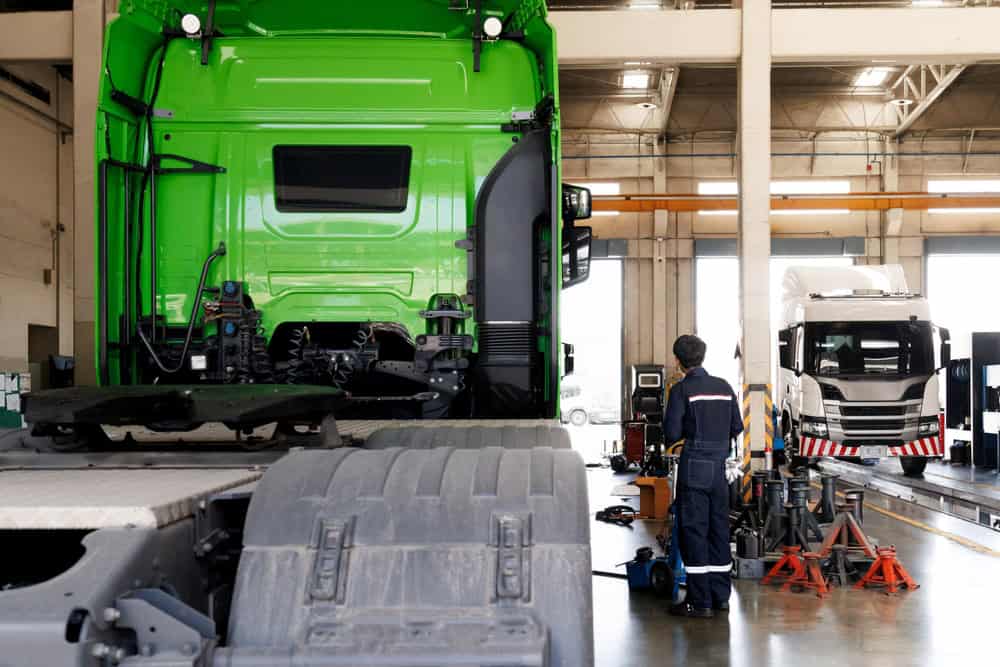
The most common mistake people make when calling for heavy towing is assuming that any company advertising the service actually has the capacity for their specific vehicle. Not every company that uses the phrase “heavy duty” is running the right equipment for a loaded tractor-trailer, a grader, or a piece of construction machinery.
A few things worth asking before you commit. First: does the company ask you detailed questions before dispatching? Weight class, vehicle type, current condition, exact location — a company that skips those questions is likely to send whatever truck is closest, not the one that’s right for the job. Second: do they carry multiple equipment types? A company with one heavy-duty wrecker may not have the rotator or specialized rigging a complex recovery requires. Third: are the operators certified? Recovery of overturned commercial vehicles requires documented training — WreckMaster Level 7 or the equivalent TROCP certification is the industry benchmark for the most demanding scenarios.
We handle Freightliners, Peterbilts, Kenworths, Volvos, Internationals, Western Stars, Macks, and more. Graders, large trucks, semi-trailers, construction equipment, bulldozers — if it’s operating on a Wayne County, MI road and it weighs over 10,000 lbs, we’ve worked on it. And because Dr. Marin’s background spans diesel engineering, drivetrains, and metal alloys, the intake process on our end is thorough. We know what equipment the job needs before we roll, which means we don’t waste your time sending the wrong truck.
Heavy Towing FAQs: What Wayne County Drivers Actually Want to Know
How much does heavy towing cost? We don’t publish a flat rate because every job is different — the vehicle, the weight, the location, and the complexity of the recovery all factor in. What we can tell you is that we provide a clear estimate before any work begins, and we honor it. A customer review we hear cited often says it plainly: “He gave us an estimate and pretty much that is what it was.” That’s the standard we hold ourselves to. No surprise billing after the fact.
How long does heavy towing take? Simple breakdowns where the vehicle is accessible and driveable with minimal prep can move quickly — sometimes within 30 minutes from the time we arrive. Complex recoveries involving rollovers, jackknifed semis, or vehicles in difficult positions take longer, sometimes several hours depending on the situation. We’ll give you an honest read on the timeline when we take your call, not an optimistic guess designed to keep you on the line.
Do you charge extra for nights, weekends, or holidays? No. Our rate doesn’t change based on when you call. That policy applies whether you’re calling at noon on a Tuesday or 3 AM on Christmas morning on I-275 in Wayne County, MI. The roads don’t stop moving because it’s a holiday, and neither do we.
Can you repair my truck instead of towing it? In many cases, yes. We carry most common parts on our mobile units, and Dr. Marin’s credentials mean the diagnosis happens fast and accurately. If the repair can be done roadside, that’s almost always the faster and cheaper path. We’ll tell you straight whether a tow is necessary or whether we can get you back on the road from where you’re sitting.
When Your Rig Goes Down in Wayne County, MI, Call the Right Number First
Heavy towing isn’t something you want to figure out in the moment. The company you call matters — the equipment they send, the person who answers, and whether they can actually solve the problem rather than just move the truck. Those details are the difference between a 30-minute fix and a two-day ordeal.
Wayne County, MI’s roads are busy, the winters are hard, and the stakes on a commercial breakdown are real. We’ve been doing this since 1999, and the experience runs deep — over 40 years combined across the team, led by a mechanic whose credentials in diesel engineering and drivetrains are genuinely unlike anything else in this market.
If you’re dealing with a heavy breakdown right now, or you want to know who to call before it happens, J&J Truck & Trailer Repair is reachable at 313-999-3088 — any hour, any day, no surcharge for when the clock says the wrong time.