
A breakdown on the shoulder of I-94 at 2 AM isn’t a minor inconvenience. It’s a missed delivery window, a potential safety hazard, and — if you’re an owner-operator — money coming directly out of your pocket. The problem isn’t that roadside assistance doesn’t exist. It’s that most of it wasn’t built for a loaded semi truck. The wrong call wastes hours. The right one gets you back on the road in thirty minutes.
This guide walks through what to actually look for, what most providers get wrong, and why Wayne County, MI has specific challenges that make your choice of provider matter more than most drivers realize.
Emergency Roadside Assistance for Trucks: What It Should Actually Cover
There’s a wide gap between what “roadside assistance” means on a passenger car plan and what it needs to mean for a Class 8 semi truck. Consumer programs — including many well-known national plans — typically exclude commercial vehicles over a certain weight or impose restrictions that make them useless for a loaded semi.
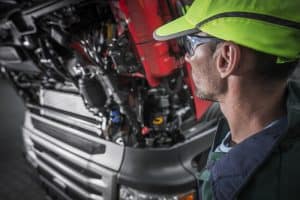
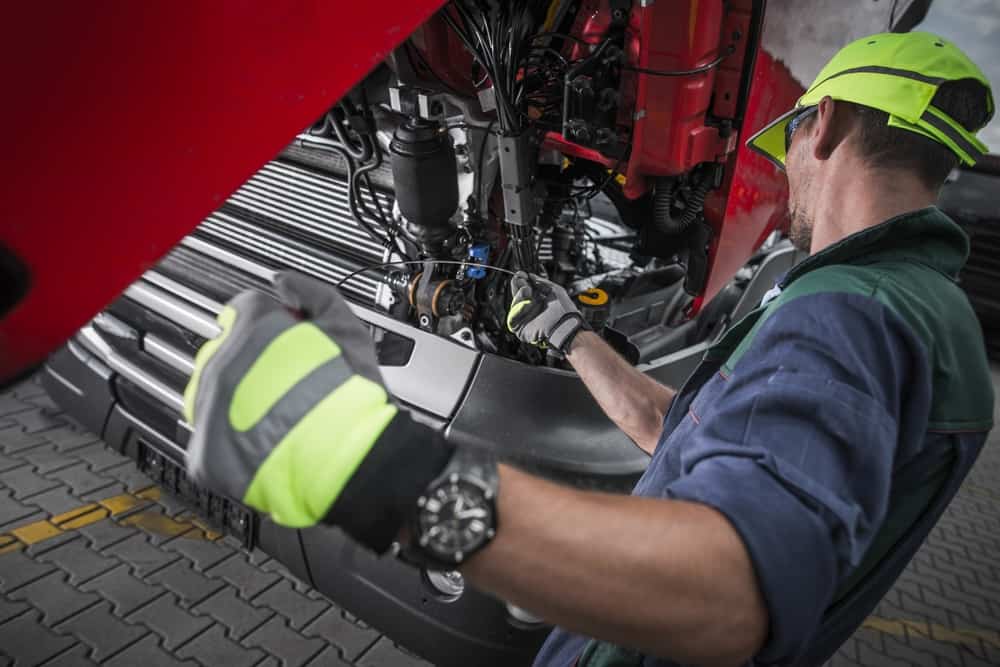
Genuine emergency roadside assistance for trucks should include on-site mechanical repair, not just a tow. If a provider’s default response to every breakdown is to hook you up and haul you to a shop, you’re looking at hours of downtime and a towing bill on top of whatever the repair costs. We send a qualified technician who can diagnose the problem where you sit — and fix it there if at all possible.
24-Hour Commercial Roadside Assistance: What "Always Available" Actually Means
Every provider in this space claims 24/7 availability. Most of them mean something narrower than that. What you actually get after midnight on a Sunday in January varies enormously — and you won’t find out until you’re already stuck.
True 24-hour commercial roadside assistance means a real person answers the phone at 3 AM with enough knowledge to dispatch immediately. Not a voicemail. Not an answering service that takes a message and promises a callback. Not a dispatcher who has to make four calls before they find someone willing to drive out in bad weather. Someone who knows the area, knows the equipment, and can make a decision on the spot.
This matters more in Wayne County, MI than it might in other markets. In 2024, Wayne County recorded 3,916 trucks or buses involved in crashes — the highest of any county in Michigan. Commercial truck traffic makes up as much as 30% of average daily volume on key segments of the I-94 corridor. The freight doesn’t stop moving at night, and neither do the breakdowns.
When one of our customers called us at 6:30 AM on a Sunday morning in 7-degree weather — 40 miles from our shop — we went. Their semi had died and they couldn’t find anyone else with genuine 24/7 service. We diagnosed the problem, had the parts on the truck, and handled the repair on-site. That’s what after-hours availability actually looks like.
Our rates don’t change based on the time of day, the day of the week, or whether it’s a holiday. A lot of providers quietly charge more when they know you have no other options. We don’t. The rate you get at noon on a Tuesday is the same rate you get at 2 AM on Christmas.
What Happens When You Call the Wrong Provider for a Semi Truck Breakdown
The most common mistake drivers make is calling a general roadside or towing company that handles passenger cars and light trucks, then assuming they’re equipped for a semi. They’re often not. A 24-volt jump-start requires commercial-grade equipment that most consumer tow trucks don’t carry. Tire service on a loaded semi isn’t the same as swapping a spare on a pickup.
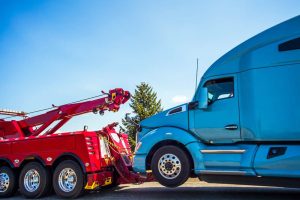
And if the issue is mechanical — a brake failure, an electrical fault, a starter that won’t turn over — a tow truck driver isn’t going to fix it. What typically happens is this: the provider shows up, realizes they can’t handle the repair, and tows the truck to a shop anyway. You’ve now lost time waiting for them to arrive, lost more time on the tow, and you’re sitting in a shop’s queue behind whoever got there before you. A breakdown that could have been resolved in under an hour on the shoulder becomes a half-day or full-day ordeal.
For owner-operators, that math is brutal. A single day of downtime can cost upward of $1,000 in lost revenue — and that’s before you factor in the towing bill, which can run $500 to $2,500 or more depending on the situation and equipment required.
The fix is straightforward: before you need help, know who you’re calling. Verify that the provider has experience with your specific truck — Freightliner, Peterbilt, Kenworth, Volvo, International, Mack, whatever you’re running. Verify that they carry diagnostic equipment and common parts. Verify that they can actually repair on-site, not just tow. And verify that when you call at an odd hour, a real person picks up.
Diesel Mechanic Roadside Service: Why Credentials Matter
“Roadside assistance” is a broad category. It includes everything from a guy with a jack and a set of jumper cables to a Ph.D. diesel engineer with a fully stocked mobile service truck. The gap between those two ends of the spectrum is enormous, and it directly affects whether your truck gets fixed on the shoulder or gets towed to a shop and sits for two days.
When you’re evaluating a diesel mechanic roadside service, credentials aren’t just a marketing detail. They’re a signal of whether the person showing up can actually handle what’s wrong with your truck — or whether they’re going to shrug and call a tow.
What ASE Certification Means for Semi Truck Roadside Repair
The ASE Medium-Heavy Truck certification — part of the T Series — is one of the most widely recognized credentials in commercial vehicle repair. Earning it requires passing a rigorous exam and having at least two years of hands-on experience. It’s not a participation certificate. It’s a meaningful indicator that the technician understands the systems on a Class 7 or Class 8 truck well enough to be tested on them.
ASE master mechanic certification goes further — it covers multiple systems and represents the highest tier of ASE credentialing. When a provider tells you their team holds ASE certification at the master mechanic level, that’s worth taking seriously.
At J&J Truck & Trailer Repair, our team holds ASE master mechanic certification. Our lead technician, Dr. Phillip Marin, holds three doctoral degrees — in Diesel Engineering, Drivetrains, and Metal Alloys. That combination doesn’t exist anywhere else in this market. When we show up to a breakdown, the person making the diagnosis has more formal education in diesel systems than virtually any other roadside provider in Michigan.
Owner-Operators in Wayne County: Why a Breakdown Hits Differently
When a company fleet driver breaks down, the process is relatively contained. Dispatch calls a vendor. The company account covers the bill. The driver waits and gets back on the road. When an owner-operator breaks down in Wayne County, MI, you are the dispatch. You’re the one making calls, evaluating providers, and paying out of pocket — usually from a phone on the shoulder of I-75 or I-94 while traffic moves past you at highway speed.
There’s no fleet coordinator to lean on, no company card to hand over, no backup driver to take the load. Every hour you’re down is income you won’t recover.
Wayne County’s freight corridors run through some of the busiest stretches of road in Michigan. The Ambassador Bridge approach on I-75 in Southwest Detroit handles significant international freight traffic. The I-94 corridor through Dearborn and into the Downriver communities is a constant flow of commercial trucks serving automotive suppliers, distribution centers, and logistics hubs in Romulus and beyond. Breaking down anywhere along these routes isn’t just inconvenient — it’s a business problem with a real dollar figure attached.
That’s exactly the situation where the quality of your roadside provider shows up. A provider who defaults to towing instead of repairing, who charges more after hours, or who sends an underqualified technician adds cost and time to an already expensive situation. What owner-operators in Wayne County actually need is someone who comes out fast, fixes it where it sits when possible, gives you an honest estimate upfront, and charges the same rate regardless of when you call.
One of our customers put it plainly after we got them back on the road: the estimate matched the final price, and the job was done within 30 minutes of our arrival. For an owner-operator watching their delivery window, that’s not a nice-to-have. That’s the whole thing.
We serve Wayne County, MI and the surrounding Detroit metro area from our base at 8332 Kirkwood St in Detroit, with mobile units positioned throughout the region. For most emergency calls in Wayne County, our average response time is 30 to 45 minutes. We handle Freightliner, Peterbilt, Kenworth, Volvo, International, Western Star, Mack, Hino, and most major trailer brands — including reefer units from Thermo-King and Carrier. If it can be repaired on-site, we repair it on-site. If you need a tow, we handle that too.
How to Choose the Best Roadside Assistance for Semi Trucks in Wayne County
The best roadside assistance for a semi truck isn’t the one with the most recognizable name or the cheapest membership fee. It’s the one that actually shows up — at any hour, in any weather — with the equipment and expertise to fix your truck where it sits and get you back on the road without a surprise bill at the end.
In Wayne County, MI, where commercial truck volume is among the highest in Michigan and the winters are genuinely brutal, that standard eliminates a lot of providers. What’s left is a short list of operations that have the credentials, the equipment, the local knowledge, and the honest billing practices to back up what they claim.
If you’re an owner-operator or fleet manager running routes through Detroit, Dearborn, Romulus, or anywhere along the I-94, I-75, or I-96 corridors, it’s worth having a reliable number saved before you need it. J&J Truck & Trailer Repair is reachable at 313-999-3088, any hour of the day or night — a real person will pick up.