
What Happens When You Call for Roadside Assistance
The process starts the second you pick up the phone. When you call us for 24/7 roadside assistance in Detroit, you’re connected with our dispatcher who needs a few key pieces of information to send help your way. We’ll ask where you are—the more specific, the better. If you’re on I-94 near the Conner exit, say that. If you’re in a parking lot off Telegraph Road, give us the cross streets or business name.
We’ll also ask what’s wrong with your vehicle. Dead battery? Flat tire? Won’t start but you’re not sure why? The more detail you can provide, the better prepared our technician will be when they arrive. And we’ll ask about your vehicle—make, model, whether it’s a commercial truck or passenger car. This helps us send the right equipment and expertise.
Once dispatch has what we need, we locate the nearest available technician and send them to your location. In Wayne County and Monroe County, response times typically fall somewhere between 20 and 60 minutes depending on traffic, your exact location, and the time of day. You’re not guessing or hoping someone shows up. We’ll give you an estimated arrival time, and many services now offer real-time tracking so you can see when help is close.
How Long Does It Take for Roadside Assistance to Arrive in Detroit
Let’s talk about the wait. Because when you’re stuck on the side of the road, every minute feels longer than it should.
Most roadside assistance companies in the Detroit area aim for arrival times between 30 and 45 minutes. That’s the target. Some services with strong local networks and strategic positioning can get to you in 20 to 30 minutes. Others might take closer to an hour, especially during rush hour on I-96 or I-75, or if you’re in a more remote part of Monroe County.
Weather plays a role too. Snow, ice, heavy rain—all of it slows things down, both for you and for the service truck trying to reach you. If there’s a pileup or road closure, expect delays. Same goes for high-demand times. If it’s a Monday morning and half of Detroit is dealing with dead batteries after a cold weekend, you might wait a bit longer.
That said, reputable providers don’t leave you in the dark. We give you an estimated time of arrival and keep you updated if anything changes. Some services even let you track the technician’s location in real time through an app or text updates. It’s not perfect, but it’s a lot better than sitting there wondering if anyone’s actually coming.
The key is choosing a provider with a solid local presence. A company based in Detroit with technicians spread across Wayne County is going to reach you faster than a national service routing calls through a central dispatch hundreds of miles away. Local knowledge matters. We know that Conner and I-94 gets congested at 5 p.m., and that certain stretches of Telegraph Road are notorious for breakdowns. We can plan routes and position trucks accordingly.
You also want a provider that’s truly available 24/7. Not “we’ll call you back in the morning” availability. Real, answer-the-phone-at-2-a.m. availability. Because breakdowns don’t care what time it is, and neither do we.
What Information You Need Ready When You Call
Being prepared when you call can shave minutes off your wait time. Here’s what you should have ready before you dial.
First, your location. If you’re on a highway, note the direction you’re traveling, the nearest exit or mile marker, and which side of the road you’re on. If you’re in a parking lot or side street, get the address or nearby landmarks. Your phone’s GPS can help—we can even use your phone’s location data to pinpoint exactly where you are.
Second, details about your vehicle. Year, make, model, color. If it’s a commercial truck, mention that. If it’s got special features like all-wheel drive or a flatbed, say so. This helps us send the right equipment. A heavy-duty truck needs different tools than a sedan, and knowing that upfront prevents delays.
Third, describe the problem as clearly as you can. “My car won’t start” is a start, but “my car won’t start and I hear a clicking sound when I turn the key” tells our technician it’s probably the battery. “I’ve got a flat tire” is good. “I’ve got a flat tire and I don’t have a spare” is better, because now we know we might need to tow you instead of just swapping the tire.
If you have a roadside assistance membership or insurance coverage, have that information handy too. Policy number, membership card, phone number on file—whatever helps verify your coverage quickly. If you’re paying out of pocket, that’s fine, but mention it upfront so there’s no confusion about billing.
And finally, stay near your phone. Our technician or dispatcher might need to call or text you with updates, questions, or to confirm they’ve arrived. If your phone’s about to die, mention that to the dispatcher so we know to prioritize getting someone to you before you lose contact.
The more prepared you are, the smoother the process goes. It’s not about being perfect—it’s about giving us the tools we need to help you quickly.
What Services Can Be Done On-Site vs Requiring a Tow
Not every breakdown ends with your vehicle on a flatbed. In fact, a lot of common roadside problems can be fixed right where you’re sitting, getting you back on the road without the hassle or cost of a tow.
Roadside assistance is designed to handle minor issues that don’t require a full repair shop. Jump-starts, tire changes, lockout help, fuel delivery—these are bread-and-butter services that our trained technicians can knock out in 15 to 30 minutes. The goal is always to get your vehicle drivable again so you can continue your trip or at least make it to a repair shop on your own terms.
But some problems are beyond a quick fix. If your engine’s blown, your transmission’s failed, or you’ve been in an accident that left your vehicle undrivable, you’re getting towed. There’s no way around it. Our technician will assess the situation, explain what’s happening, and arrange transport to the nearest repair facility or wherever you need the vehicle to go.
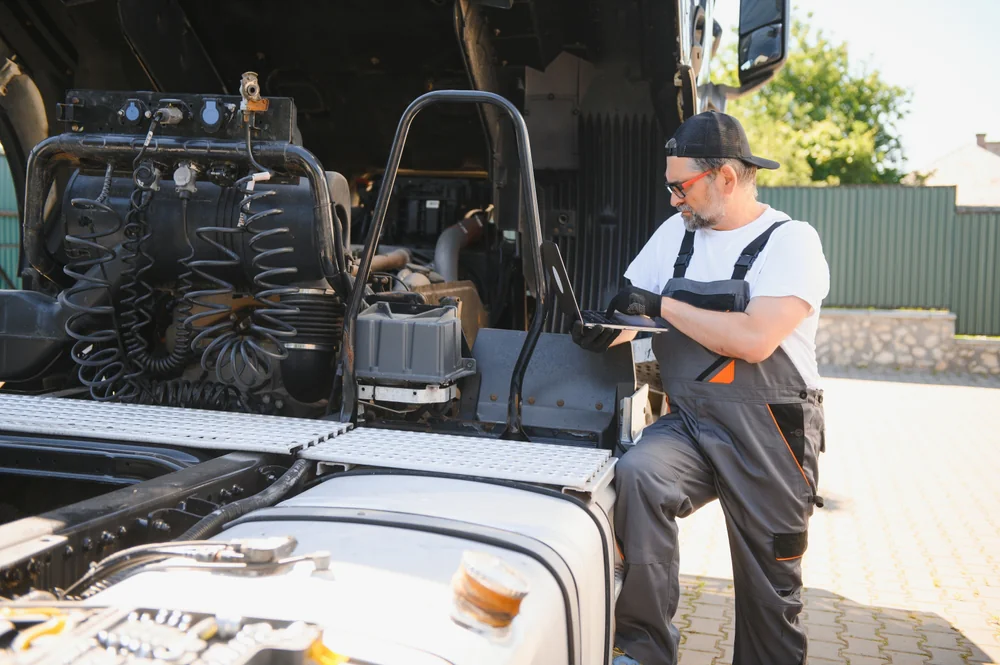
Common Repairs That Can Be Handled Roadside
Let’s break down what we can actually fix on the spot. These are the services that keep you moving without needing a tow truck.
Jump-starts are probably the most common roadside fix. Your battery’s dead—maybe you left the lights on, maybe it’s just old and gave out. Our technician shows up with a portable jump pack or jumper cables, gets your engine running, and you’re good to go. If the battery’s completely shot, we can even replace it on-site, though you’ll pay for the new battery itself.
Tire changes are another big one. You’ve got a flat, but you’ve got a spare in the trunk. Our technician swaps the flat for the spare, and you’re back on the road. The whole thing takes maybe 15 minutes. If you don’t have a spare, or if the spare’s also flat, that’s when you’re looking at a tow to a tire shop.
Fuel delivery is straightforward. You ran out of gas. It happens. We bring enough fuel—usually a couple of gallons—to get you to the nearest gas station. You’ll pay for the fuel itself, but the delivery and service are often covered if you have roadside assistance.
Lockout assistance is for when you’ve locked your keys in the car. Our technician with the right tools can usually get your door open without damaging the lock. If your keys are lost or broken, that’s a different story—you might need a locksmith or a tow to a dealership.
Minor mechanical fixes can sometimes be handled roadside too. A loose battery cable, a disconnected hose, a blown fuse—small things that don’t require major tools or parts. If our technician has what they need on the truck and the fix takes under an hour, we’ll handle it. If it’s more complicated, you’re headed to a shop.
The key here is that roadside assistance is about quick, on-the-spot solutions for common problems. It’s not a mobile repair shop. It’s emergency help designed to get you out of a jam fast.
When Towing Becomes Necessary and What to Expect
Sometimes the problem’s too big to fix on the side of the road. When that happens, towing is the next step.
Engine failure is a clear-cut case. If your engine’s overheating to the point of damage, if it’s seized up, or if you’ve got a major mechanical failure, you’re not driving that vehicle anywhere. We’ll arrange a tow to the nearest repair shop or wherever you specify.
Transmission problems fall into the same category. If your transmission’s slipping, grinding, or completely failed, trying to drive it will only make things worse. A tow truck is the only safe option.
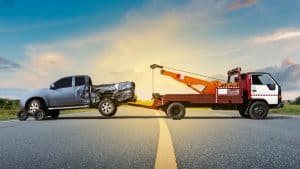
Accident damage is another obvious one. If you’ve been in a collision and your vehicle’s undrivable—whether it’s frame damage, suspension issues, or just too banged up to be safe—it’s getting towed. We’ll make sure it’s loaded safely and transported without causing further damage.
Brake failures are non-negotiable. If your brakes aren’t working, you’re not driving. Period. We’ll call for a tow, and your vehicle will be taken to a shop that can handle brake repairs.
Situations where a spare isn’t available also require towing. If you’ve got a flat and no spare, or if the spare’s also flat, you’re not going anywhere on your own. The tow truck will take you to a tire shop where you can get a replacement.
When you’re being towed, here’s what to expect. We’ll secure your vehicle properly—either on a flatbed or with a wheel lift, depending on the type of vehicle and the situation. We’ll ask where you want it taken. If you have a preferred repair shop, we’ll take it there as long as it’s within a reasonable distance. If you don’t have a preference, we’ll recommend the nearest qualified facility.
You’ll also want to clarify what’s covered. Some roadside assistance plans cover a certain number of miles—say, up to 10 or 20 miles—before additional charges kick in. If your preferred shop is 30 miles away, you might be paying extra for the distance. Ask upfront so there are no surprises.
And if you’re with the vehicle when it’s towed, make sure you grab anything you need from inside—phone charger, wallet, important documents. Once it’s at the shop, you might not have immediate access.
Towing isn’t ideal, but when it’s necessary, we make the process as smooth and transparent as possible. You’ll know where your vehicle’s going, how much it’s costing, and what happens next.
Getting the Right Help When You Need It Most in Detroit
Roadside assistance isn’t complicated, but knowing how it works makes a stressful situation a lot more manageable. You call, you give us the details, we send someone out. That person either fixes the problem on-site or arranges a tow. You get updates along the way, and you’re not left guessing.
The difference between a frustrating experience and a smooth one comes down to who you call. A provider with local knowledge, fast response times, and the expertise to handle both minor fixes and major towing needs is worth having on speed dial. Whether it’s a dead battery at 3 a.m. or a blown tire on I-94 during rush hour, you want someone who answers the phone, knows the area, and shows up ready to help.
At J&J Truck & Trailer Repair, we’ve been handling emergencies like yours for over 40 years. We know Detroit. We know trucks. And we know how to get you moving again.