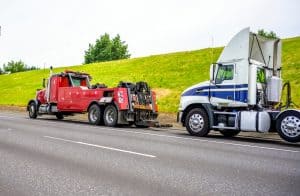
Your semi is sitting on the shoulder of I-75, a mile from the Ambassador Bridge crossing, and you’ve got a load that needed to be delivered an hour ago. You pull out your phone and stare at it. Do you call a tow? Do you call a mobile mechanic? Do you even know the difference between the two when the pressure is on?
Most drivers don’t — not until they’ve made the wrong call and paid for it. This post breaks down exactly how to think through that decision, what a qualified mobile diesel mechanic can actually fix on the spot, and what it costs you when you default to a tow for a problem that didn’t need one.
What Does a Semi Truck Mobile Mechanic Actually Do?
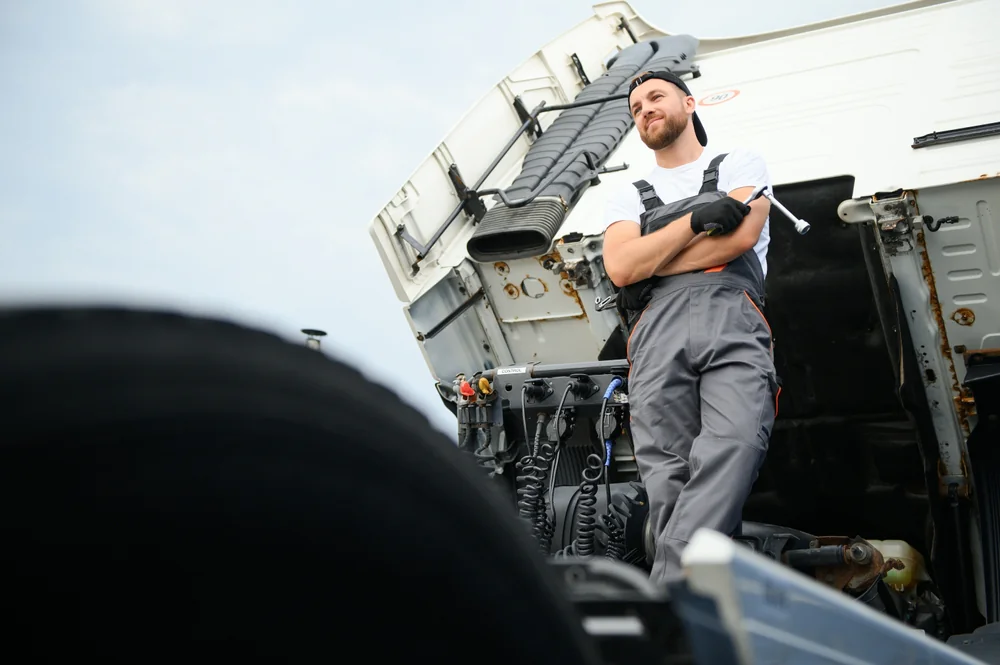
A semi truck mobile mechanic is exactly what it sounds like — a fully equipped diesel technician who comes to your breakdown location with the tools, parts, and diagnostic equipment needed to fix the problem on the spot. Not a roadside assistance driver with jumper cables. Not a tow operator moonlighting as a mechanic. A trained diesel tech who can diagnose engine codes, replace brake components, address drivetrain issues, and get you moving again without ever loading your truck onto a flatbed.
The distinction matters because a lot of drivers assume mobile repair is only good for minor stuff — a dead battery, a blown tire, maybe a quick fluid top-off. That’s not the full picture. A properly equipped mobile unit can handle roughly 80 to 90 percent of the issues that actually strand semi trucks on the road. That includes diesel engine diagnostics, injector problems, turbo issues, ABS system repairs, leaf spring replacements, and more. The shop visit is often not necessary at all.
What Can a Mobile Diesel Tech Fix Without a Shop?
This is the question most drivers should be asking before they ever call a tow — and very few do, because the assumption is that anything serious requires a shop. That assumption costs money.
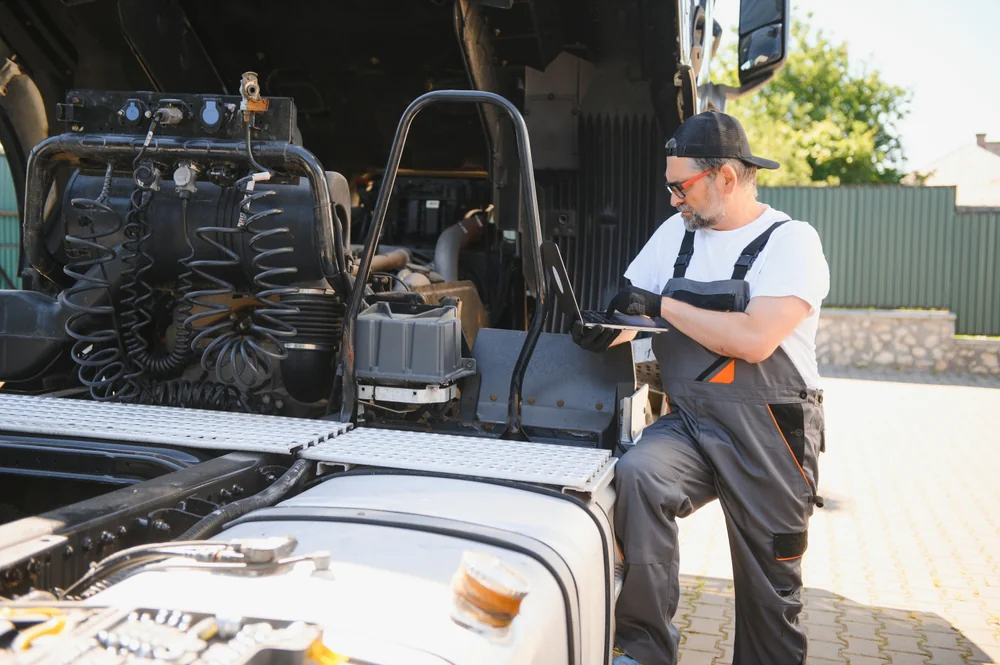
A qualified mobile diesel tech working out of a fully stocked service vehicle can address diesel engine diagnostics and fault codes, fuel system issues including injector problems, turbocharger failures, brake system work from pad replacement all the way through full ABS repairs, transmission and drivetrain diagnostics, differential service, electrical troubleshooting, and air system repairs. Leaf spring replacements — the kind of job that sounds like it absolutely requires a lift and a shop floor — have been completed roadside, on an interstate, in under an hour.
The key phrase there is “fully stocked.” Not every mobile operator carries the inventory or has the depth of training to handle the full range of problems. That’s where credentials matter in a way that a generic “certified mechanic” claim doesn’t capture. Dr. Phillip Marin, who leads our team at J&J Truck & Trailer Repair, holds three doctoral degrees — in Diesel Engineering, Drivetrains, and Metal Alloys. That’s not a marketing line. Customers who’ve used us have noted the “(actual P.H.D.)” in their own reviews because it surprised them too. When your truck has a problem that’s stumped other mechanics, the depth of knowledge behind the diagnosis makes a real difference.
Wayne County’s roads are also a factor here that doesn’t get mentioned enough. Michigan’s freeze-thaw cycles are relentless, and the potholes and pavement damage they create are a leading cause of suspension failures, blown tires, and wheel-end problems on semi trucks. If you’re running loads through Dearborn, Romulus, or down I-275 toward Detroit Metro Airport, you’ve felt what those roads do to a truck over time. A mobile diesel service that knows this terrain and carries the parts most likely to fail on it is a different resource than a generalist who shows up and figures it out as they go.
When Does a Tow Truck Actually Make More Sense?
A tow is the right call in specific situations — and being honest about that is part of giving you useful information instead of just a sales pitch. If your engine has seized, if there’s been a collision that’s compromised the frame or structural integrity of the truck, if the transmission has failed catastrophically, or if the repair requires a full shop lift and equipment that physically cannot come to you — those are real cases where towing makes sense. Nobody is going to rebuild a destroyed differential on the shoulder of I-94.
But here’s what happens more often than it should: a driver calls a tow first because it feels like the “safe” choice, the tow operator loads the truck, and it ends up sitting at a shop for two or three days waiting for a bay to open up. The tow bill is already paid. The driver is now dealing with hotel costs, missed delivery windows, and a dispatcher who is not happy. And when the truck finally gets looked at, the diagnosis is something that could have been handled roadside in under an hour.
The true cost of a breakdown is almost never just the repair bill. Industry data puts unplanned downtime for commercial trucks at an average of $760 per hour in lost productivity, overtime, and delivery delays. That clock starts running the moment your truck stops moving. Every hour the truck sits waiting for a tow, waiting in a shop queue, waiting for a parts order — that’s $760. The math changes fast when you compare it against a mobile repair that gets you back on the road in 30 minutes.
For fleet managers running trucks through Wayne County’s automotive supply corridors — parts haulers feeding Ford’s operations in Dearborn, refrigerated loads moving through Romulus near DTW, flatbeds navigating the I-75 Ambassador Bridge approach — the cost of a delayed load is not abstract. It’s a penalty clause. It’s a client relationship. It’s a driver sitting idle on overtime. Having a pre-vetted mobile repair vendor in your dispatch system before a breakdown happens isn’t a luxury — it’s a cost-control decision.
Diesel Mobile Repair in Wayne County: Why Local Expertise Changes Everything
Wayne County, MI is not a typical market for commercial vehicle breakdowns. It’s one of the most freight-dense counties in the Midwest — home to the Ambassador Bridge, Detroit Metropolitan Wayne County Airport in Romulus, and the automotive manufacturing ecosystem that runs through Dearborn and the surrounding industrial zones. Trucks don’t just pass through Wayne County; they work here, around the clock, on some of the most demanding road conditions in the country.
That density means breakdowns happen in places where a tow is complicated, slow, or genuinely expensive. It also means the stakes of downtime are higher here than in a less trafficked market. A mobile diesel repair service that knows Wayne County’s corridors, responds to I-94, I-75, I-96, and I-275, and carries the inventory for the kinds of failures Michigan roads produce — that’s a different resource than a national directory listing or a shop with a tow truck on call.
Mobile Fleet Mechanic Services: What Fleet Managers in Wayne County Should Know
If you’re managing a fleet — even a small one — the question of mobile versus tow is not just a breakdown-day decision. It’s a vendor relationship decision you should be making before anything goes wrong.
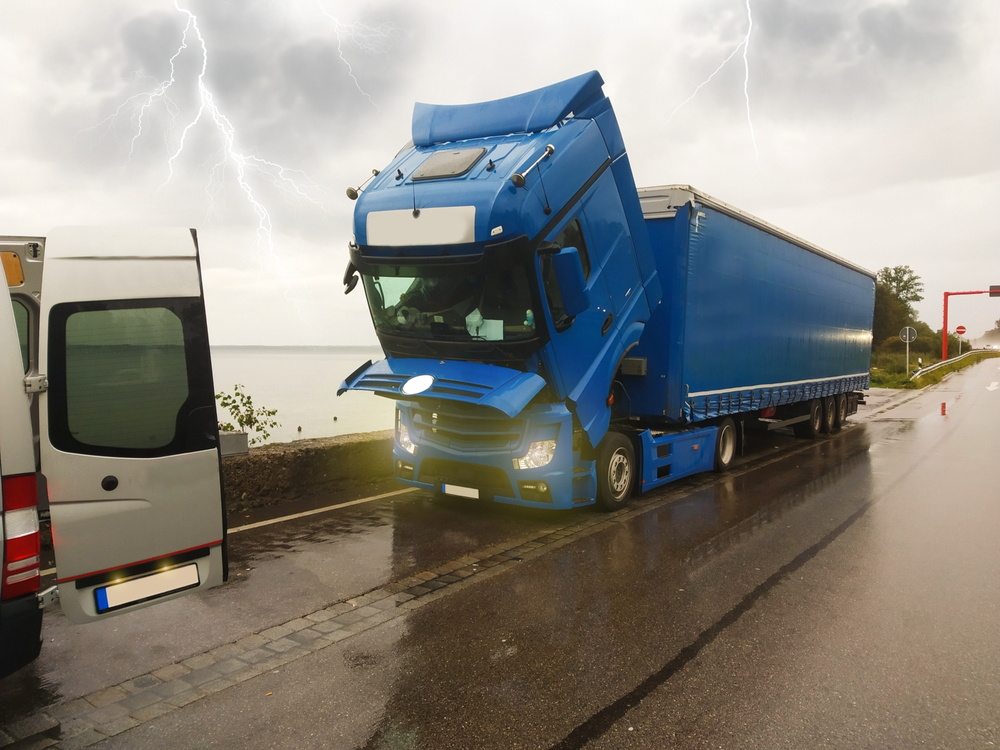
Fleet operators who run trucks through Wayne County without a pre-vetted mobile repair contact are essentially making a gamble every time a truck leaves the yard. When the breakdown happens — and it will — the driver is going to search for whoever comes up first, call whoever answers, and make a decision under pressure with no information about quality, pricing, or capability. That’s how you end up with an unnecessary tow, an inflated bill, and a truck sitting in a shop for three days because there was no relationship in place.
What a pre-vetted mobile fleet mechanic relationship actually looks like in practice is simpler than it sounds. You have a number in your dispatch system. When a truck goes down in Wayne County, the driver calls that number instead of searching blind. The mechanic knows the territory, responds to the major freight corridors, and can give an honest assessment of whether the problem is fixable on-site or genuinely requires a shop. That assessment — from someone who isn’t trying to sell you a tow — is worth more than most fleet managers realize until they’ve had it.
We’ve been serving Detroit’s trucking community for over 40 years. That’s not a number we throw around for effect — it means we’ve seen what Wayne County roads do to trucks across every season, every freight cycle, and every generation of diesel technology. When a driver calls us from the shoulder of I-96 at 2 AM in January, we know what’s most likely wrong before we even pull up, and we show up with the parts to fix it.
How Do You Know the Mobile Mechanic You're Calling Can Actually Fix It?
This is the fear underneath the tow-truck default that nobody talks about directly: you’re not just worried about cost. You’re worried about calling a mobile mechanic, waiting an hour for them to show up, and then hearing “I can’t fix this here — you’re going to need a tow anyway.” Now you’ve lost an hour and you’re still stranded.
It’s a legitimate concern, and the answer isn’t just “trust us” — it’s knowing what to look for before you make the call.
A genuinely capable mobile diesel service will have a stocked service vehicle, not just a pickup truck with a toolbox. We can tell you, before we arrive, what we can and can’t handle based on your description of the problem. We give you an estimate up front and stick to it. That last point matters more than it might seem. One of the things customers consistently note about their experience with us is that the estimate matched the final bill — not approximately, but accurately.
ASE certification is a baseline — it’s what most mobile mechanics will mention because it’s the most recognizable credential in the industry. But there’s a meaningful difference between a technician who passed a certification test and a lead mechanic with doctoral-level training in diesel systems. Dr. Phillip Marin’s background in Diesel Engineering, Drivetrains, and Metal Alloys means the diagnostic process is grounded in a depth of knowledge that most mobile operators in Wayne County simply don’t have. When a problem is unusual, when a fault code is ambiguous, when a repair needs to be done right the first time because there’s no margin for error — that depth matters.
We also want to be straight with you about the cases where we’ll tell you a tow makes more sense. If the problem is beyond what we can safely and properly address on-site, we’ll say so. That’s not a failure of the mobile model — it’s what honest service looks like. What we won’t do is push you toward a tow when a roadside repair is the right answer.
Making the Right Call When Your Semi Goes Down in Wayne County
The decision between a mobile mechanic and a tow truck comes down to one question: what does this problem actually require? For the majority of semi truck breakdowns — engine issues, brake problems, suspension failures, electrical faults — the answer is a qualified mobile diesel tech with the right equipment, not a flatbed and a shop queue.
Wayne County’s freight corridors don’t leave much room for error. Whether you’re hauling automotive parts through Dearborn, moving cargo near DTW in Romulus, or navigating I-75 toward the Ambassador Bridge, downtime here has real consequences. Knowing who to call before the breakdown happens is the simplest thing you can do to protect your schedule, your load, and your bottom line.
If you’re an owner-operator or a fleet manager running trucks through this area, J&J Truck & Trailer Repair is available around the clock at 313-999-3088. We’ll tell you honestly what we can fix on-site — and we’ll get there.