
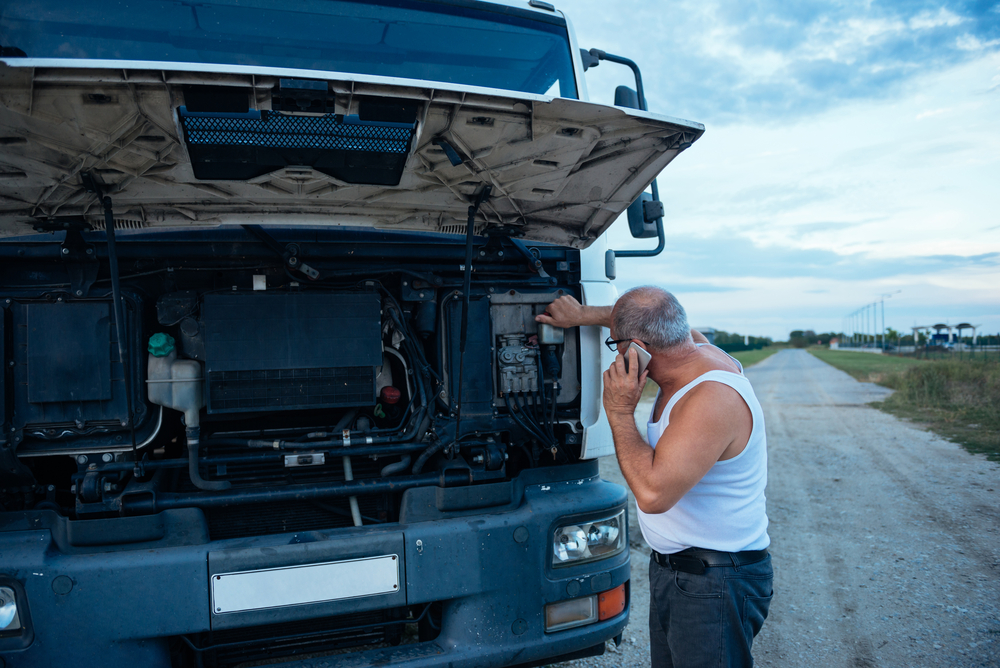
If you’ve ever walked out to a truck that cranked but wouldn’t fire on a January morning in Detroit, you already know what diesel gelling feels like. It’s not dramatic — no smoke, no warning light, no obvious reason. The truck just doesn’t start. And if you’re running loads tied to an automotive plant in Dearborn or crossing into Wayne County, MI from a Canadian fill-up, that one cold morning can unravel your whole week.
The good news is that gelling is almost entirely preventable. But the window to act is shorter than most operators think — and it opens in October, not December.
What Actually Causes Diesel Fuel to Gel in Cold Weather
Diesel fuel contains paraffin wax. That’s not a flaw — it’s just chemistry. Under normal temperatures, that wax stays dissolved and invisible. But when the temperature drops, those wax molecules start to crystallize. First the fuel clouds up, then it thickens, and eventually it can plug your fuel filters completely and stop flow to the engine.
Standard #2 diesel — the fuel most trucks run on — starts to cloud around 32°F and can begin gelling between 10 and 15°F. Michigan’s average January low in Detroit is around 19°F. That’s not a fringe scenario. That’s a typical Tuesday in Wayne County, MI.

The Difference Between Diesel Clouding and Diesel Gelling — and Why It Matters
These two stages get lumped together, but they’re not the same problem, and treating them the same way leads to wasted money and frustration.
Clouding is the first stage. When you see a haze or milky tint in your fuel, wax crystals are forming but fuel can still flow. Your truck will likely start and run, though you may notice sluggishness or rough idle. This is the stage where anti-gel additives can still do their job — they work by modifying those wax crystals so they stay small and don’t clump together, keeping fuel flowing through your filters.
Gelling is what happens when you wait too long. Once the fuel has thickened to the point where it can’t pass through your fuel filter, you’re past the point where additives help. The wax has already locked up. At that stage, the only fix is heat — either a portable fuel heater, a warm shop, or a mobile technician who can thaw the system on-site. Pouring more additive into a gelled tank is one of the most common and costly mistakes operators make.
There’s also a third measurement worth knowing: the Cold Filter Plugging Point, or CFPP. This is the temperature at which diesel fuel fails to pass through a standardized filter — and it’s the number that actually tells you when your truck won’t start, not just when the fuel looks cloudy. For untreated #2 diesel, the CFPP typically sits only 3 to 5 degrees below the cloud point. That’s an extremely thin margin. A fuel that clouds at 20°F may completely plug your filter by 15°F. In Wayne County, MI, where polar vortex events can drop temperatures 20 degrees in a matter of hours — especially in the southern end of the county near Lake Erie — that margin disappears fast.
The practical takeaway: don’t wait for visible clouding to act. By the time you can see the problem, you’re already behind.
When to Start Preventing Diesel Gelling in Michigan — Earlier Than You Think
Most operators start thinking about gelling prevention after the first cold snap hits. That’s too late. October is the right window — and not the end of October.
Here’s why timing matters so much in Michigan specifically. Fuel distributors in the state typically begin transitioning to winter-blend diesel in October, but that transition isn’t instant. If you fill up in early October, there’s a real chance you’re still running a summer-blend fuel. Summer-blend #2 diesel has a higher wax content and a higher cloud point than winter-blend fuel. If temperatures drop sharply before your supplier has made the switch, you’re running the wrong fuel at the wrong time with no buffer.
The fix isn’t complicated. Add a quality anti-gel fuel treatment before temperatures fall below 32°F — not after. Treat every tank, not just the first one of the season. And if you’re managing multiple trucks, do a quick check on your fuel filters before November. A clogged or aging filter that barely passes inspection in September can become a full stoppage in January.
A few other things that make a real difference in Wayne County, MI winters: keep your tanks as full as possible overnight. A half-empty tank has more air space, which means more condensation, which means water in your fuel system. Water freezes before diesel gels — and a frozen water separator can stop your truck just as effectively as gelled fuel. Draining your water separator weekly during the cold months is a small habit that prevents a big headache.
If your trucks sit overnight outside — which is common for operators running out of freight yards in Romulus, Riverview, or along the I-94 corridor — consider a block heater or an overnight fuel heater. These aren’t expensive solutions, and they’re far cheaper than a morning breakdown during a shift change for an automotive supplier.
What Wayne County Fleet Operators Get Wrong About Diesel Gelling Prevention
There are a few beliefs that circulate among operators that sound reasonable but cause real problems when temperatures drop.
The most dangerous one is this: “If I bought anti-gel at the truck stop, I’m covered.” Anti-gel additives work — but only when used correctly. The right ratio matters. Adding them after the fuel has already clouded doesn’t work. And in extreme cold events, even treated fuel can gel if the additive isn’t rated for the temperatures you’re hitting.
The second common mistake is assuming that winter-blend diesel from the pump eliminates the need for additives entirely. Winter blends are better than summer blends, but they’re not engineered for polar vortex conditions. When Southeast Michigan gets hit with overnight lows in the single digits or below zero — which happens — a winter-blend fuel without additional treatment can still give you problems.

Does Anti-Gel Additive Actually Work — and How Much Do You Need?
Yes — when used correctly, anti-gel additives genuinely work. Quality products can lower your fuel’s Cold Filter Plugging Point by up to 40°F, which is a meaningful margin in a Michigan winter. The key phrase is “when used correctly.”
The ratio matters more than most operators realize. Check the product label and treat according to the number of gallons in your tank — not a rough estimate. Under-treating is a common issue, especially on large-tank semis where operators eyeball the amount. If you’re running a 150-gallon tank, treat the full 150 gallons. Cutting corners on the ratio is one of the main reasons operators end up convinced that additives don’t work when the real issue was underdosing.
Timing is the other variable. The additive needs to be in the tank before the fuel reaches its cloud point. Add it when you fuel up, not when you notice the truck running rough. Think of it like antifreeze in a cooling system — you don’t wait for the engine to overheat before adding coolant.
Cost-wise, anti-gel treatment runs roughly $5 to $12 per 100 gallons of fuel. That’s a fraction of what one breakdown costs. A tow for a heavy semi in Wayne County, MI isn’t a small bill — and that’s before you factor in the lost revenue from a missed load, the driver hours burned sitting on the shoulder of I-75 or I-96, and the potential for engine damage if someone tries to force-start a truck with a fully gelled fuel system. The math is straightforward. Treat the fuel.
One more thing worth mentioning: biodiesel blends gel at higher temperatures than standard petroleum diesel. If your fleet runs on a biodiesel blend — B20, B5, or similar — your cloud point and CFPP are higher than the numbers you’ll see on standard #2 diesel charts. Treat accordingly, and talk to your fuel supplier about what blend you’re actually running before winter hits.
What to Do If Your Diesel Truck Already Won't Start in Cold Weather
Prevention is the goal, but sometimes it fails — or someone in your fleet didn’t get the memo in October. Here’s what to do when you’re already in the situation.
First, don’t keep cranking. Repeatedly trying to start a truck with a gelled or plugged fuel system can damage the fuel pump and injectors. If the engine cranks but won’t fire in cold weather, stop after a few attempts and diagnose before you try again.
Second, don’t assume it’s the battery. This is one of the most common misdiagnoses in cold-weather no-starts. Battery failure and fuel gelling produce nearly identical symptoms — the engine cranks but doesn’t fire. Many operators replace a perfectly good battery only to find the truck still won’t start because the real problem was gelled fuel or a frozen water separator. If your battery tests healthy, the fuel system is the next place to look.
Third, heat is the solution — not more additive. Once gelling has occurred, the fuel needs to warm up before it will flow again. In a shop, this means warming the vehicle and fuel system until the wax re-dissolves. In the field, it means calling someone with the equipment to handle it on-site.
This is where having a number saved in your phone matters. When it’s 4 a.m. and your driver is sitting on the shoulder of I-94 near the Southfield Freeway interchange in February, you don’t want to be searching for a roadside service that can handle a heavy-duty semi — and actually shows up. We’ve been doing exactly this kind of work in Wayne County, MI for over 40 years. Dr. Phillip Marin, who leads our team, holds three Ph.D. degrees in Diesel Engineering, Drivetrains, and Metal Alloys. When we show up to a cold-weather no-start, we’re not guessing at the problem. Our service vehicles carry the diagnostic equipment and tools to handle fuel system issues on-site — no tow required in most cases. And we charge the same rate at 4 a.m. in January as we do at noon in July. No surge pricing. No weekend markup.
If you’re managing a fleet with runs tied to automotive plants in Dearborn or freight moving through DTW cargo operations in Romulus, a gelled truck isn’t just an inconvenience — it’s a potential line-stoppage event with real financial consequences. Having a plan before winter hits is worth more than any additive.
The Short Version: How to Keep Your Diesel Running Through a Wayne County Winter
Start treating your fuel in October — before the first freeze, not after. Use anti-gel additives at the correct ratio for your tank size, treat every fill-up, and don’t rely on winter-blend diesel alone when temperatures drop into the single digits. Keep your tanks full overnight to minimize condensation, drain your water separators weekly, and replace fuel filters before November if they haven’t been changed recently.
If a truck goes down anyway, stop cranking, rule out the battery, and get heat to the fuel system before you try anything else.
And if you’re in Wayne County, MI and need someone on-site fast — day or night, any day of the year — J&J Truck & Trailer Repair is reachable at 313-999-3088. We’ll come to you.