You’re on the shoulder of I-94, somewhere between Dearborn and the airport interchange, and your drive tire just let go. The truck is stable. You’re safe. Now what?
Most drivers think the hard part is over once they get the rig stopped. It isn’t. The decisions you make in the next 10 to 15 minutes — who you call, what you do while you wait, and what you assume about the damage — often determine whether this is a quick roadside fix or a half-day nightmare. This page breaks down what actually happens during a semi truck tire repair, what drivers routinely get wrong, and what separates a provider who can actually help from one who shows up without the right tire.
What Is Semi Truck Tire Repair and How Is It Different from Regular Tire Service?
Semi truck tire repair is a specialized service — and that distinction matters more than most drivers realize. Commercial truck tires operate under load conditions, speed ratings, and federal regulations that have nothing in common with passenger vehicles. A repair that’s perfectly acceptable on a car tire can be a DOT violation on a steer axle tire.
The FMCSA sets specific requirements for commercial truck tires: minimum tread depths vary by axle position, sidewall repairs are not permitted on steer tires, and any tire with an audible leak or exposed ply is an automatic out-of-service violation. Calling a general auto tire shop when you’re in a bind — especially if you’re newer to the industry — is a common mistake that costs time and sometimes results in a repair that puts you back out of compliance.

Steer, Drive, and Trailer Tires Are Not the Same — and Neither Are the Repairs
One of the most overlooked facts in commercial tire service is that the three tire positions on a semi truck each have different specifications, different tread depth requirements, and different rules around what can be repaired versus what must be replaced.
Steer tires carry the front axle and directly affect steering response and stopping distance. The FMCSA requires a minimum of 4/32″ tread depth on steer tires — double the 2/32″ requirement for drive and trailer positions. Sidewall damage on a steer tire is not repairable under any circumstances. If the sidewall is compromised, the tire gets replaced. Full stop.
Drive tires handle the torque load and are the most likely to suffer tread separation or impact damage from road debris. Wayne County’s industrial corridors — the routes running through River Rouge, Ecorse, and Melvindale — see more nail and object punctures than clean highway surfaces, and drive tires absorb most of that punishment. A drive tire with a puncture in the tread area can often be repaired if the damage is within the repairable zone and the internal structure is intact. But that assessment has to happen on-site, by someone who knows what they’re looking at.
Trailer tires get less attention but cause plenty of problems. Because they’re not driven or steered, underinflation often goes unnoticed until the tire fails. Trailer tire blowouts are a leading cause of road debris on Michigan’s freeways, and they frequently damage fenders, mud flaps, and brake lines when they let go — which is why a good roadside tire service checks more than just the blown tire.
The bottom line: the position of the tire determines what kind of repair is even on the table. A provider who treats all three positions the same is either inexperienced or cutting corners.
Why Most Semi Truck Tire Blowouts Are Preventable — and What Causes Them
About 80% of semi truck tire blowouts trace back to one cause: heat generated by a chronically underinflated tire. The tire doesn’t blow out because of the underinflation itself — it blows out because the sidewall flexes excessively at low pressure, which generates heat, which breaks down the internal structure over time until the tire fails, often suddenly and at highway speed.
This is especially relevant in Michigan, where temperature swings between seasons are significant. A tire inflated correctly in July can be running 10 to 15 PSI low by January. Drivers who don’t check tire pressure regularly through the winter often find out in the spring — when roads heat up again and that heat gets added to a tire that’s already been compromised.
Wayne County’s road conditions add another layer. The freeze-thaw cycle that Michigan goes through every winter is brutal on pavement, and the urban and industrial roads in Detroit, Dearborn, and surrounding cities take the worst of it. Pothole season — roughly February through April — spikes tire damage calls every year. A pothole impact on an already-stressed tire doesn’t have to be massive to trigger a failure. It just has to be the last straw.
Tire blowouts contribute to an estimated 30% of semi-truck accidents, and the FMCSA’s data ties tire-related issues to roughly 8,000 large truck crashes annually. These aren’t abstract statistics — they’re why this maintenance category matters so much. A blown tire at highway speed is a serious event, and the choices made in the minutes before and after it happens directly affect your safety and your bottom line.
Finding a Semi Tire Shop That Actually Comes to You
The phrase “semi tire shop” still conjures an image of a brick-and-mortar location where you pull in, wait, and get back on the road. That model doesn’t work when your truck is loaded and sitting on the shoulder of I-75 near the Ambassador Bridge approach, or when you’re parked in a distribution lot in Romulus at 2 in the morning waiting on a tire that may or may not be in stock somewhere nearby.
Mobile semi truck tire service is the practical reality for most roadside emergencies. The question isn’t whether to call a mobile provider — it’s whether the one you call will actually show up prepared.
The Number One Reason a Tire Emergency Turns Into a Half-Day Ordeal
Ask any driver who’s been through a bad roadside tire experience and the story almost always goes the same way: someone showed up without the right tire. The provider was called, gave an ETA, arrived — and then announced they didn’t have the correct size for your position, or didn’t carry the load rating you need, and had to go source the tire from somewhere else. Meanwhile, you’re still on the shoulder.
This is the most documented frustration in trucker forums and roadside service reviews, and it’s entirely avoidable. A properly equipped mobile truck tire service arrives with the sizes and load ratings most commonly needed for steer, drive, and trailer positions. That means one visit, one conversation, and one bill — not two dispatches and a three-hour wait.
When you call a provider, ask directly: do you have my tire size on the truck right now? If they can’t answer that clearly, that’s information. National breakdown networks — the kind that take your call and then dispatch a local sub-contractor — add an extra layer of delay and remove direct accountability. By the time the sub-contractor is located, briefed, and en route, you’ve already lost an hour. And if that sub-contractor doesn’t have your tire, you’ve lost two.
For drivers running loads through Wayne County — whether it’s automotive JIT freight out of Dearborn, cargo moving through DTW Airport in Romulus, or cross-border loads using the I-75 corridor to the Ambassador Bridge — downtime isn’t just an inconvenience. It can mean a missed customs window, a late delivery, or a production-line delay at the receiving facility. The math on that gets expensive fast. Industry figures put semi-truck downtime at $1,000 to $2,000 per day, and that number doesn’t account for the relationship cost of a missed delivery window.
What a Real Truck Tire Service Call Should Look Like — From Arrival to Done
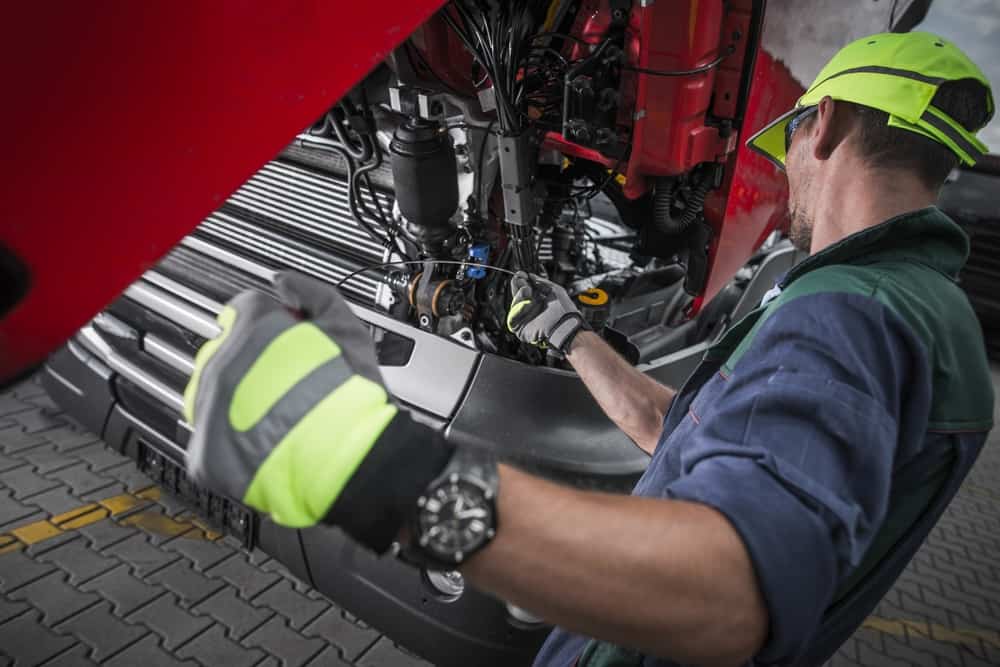
A proper mobile truck tire service call isn’t just a tire swap. It’s an assessment. When a tire blows at highway speed, the damage rarely stops at the tire itself. The rim is often compromised. Brake lines and airlines can be clipped by the debris. Fenders and mud flaps take hits. A technician who changes the tire and leaves without checking the surrounding components is leaving you with unknown damage that may show up at the worst possible time — like during a DOT inspection, or on the next run.
The process should start with a clear estimate before any work begins. You should know what you’re paying before the first lug nut comes off. The estimate and the final bill should match — not approximately, but actually match. After-hours call-out fees, mileage surcharges, and per-lug charges are real and documented complaints from drivers who thought they understood what they were agreeing to.
A well-prepared technician with the right tire on the truck can complete a standard drive or trailer tire replacement in under an hour. After the tire is changed, we confirm the repair is DOT-compliant for the axle position, check the surrounding components for secondary damage, and make sure you’re clear to roll. If there’s anything else that needs attention — a brake line that took a hit, a fender that’s now a road hazard — you should hear about it before you pull out, not after your next pre-trip.
This is what good truck tire service looks like. It’s not complicated. It’s just not universal.
Semi Truck Tire Repair in Wayne County: What to Do When It Happens to You
When a tire goes, the instinct is to react fast. That’s understandable. But the best thing you can do in those first few minutes is get the truck safely off the road, assess whether there’s secondary damage visible from the cab, and call a provider who you already know will show up with the right equipment.
Don’t drive on a flat — not even a slow one. Don’t assume the damage is limited to the tire. And don’t call a general auto shop or a national dispatch network if you need a commercial tire service that actually understands what you’re driving.
We’ve been handling roadside tire emergencies for drivers across Wayne County and the Detroit metro area for over 40 years. Our lead mechanic, Dr. Phillip Marin, holds three Ph.D. degrees in Diesel Engineering, Drivetrains, and Metal Alloys — and our trucks arrive stocked and ready to work, not to make promises and then go find a part. If you’re on the side of the road right now, or you want a number saved before you need it, call J&J Truck & Trailer Repair at 313-999-3088.