
You’re on the side of I-94 with a truck that won’t move, a dispatcher on the other end of the phone, and a delivery window that’s already getting tight. The first instinct for most drivers is to call a tow. It’s the default. It’s what people do. But before that hook goes under your frame, it’s worth asking one question: does this truck actually need to be towed, or does it need a mechanic? The answer changes everything — not just what you’ll pay, but how much of your day you’ll have left when it’s over.
Semi Truck Towing: What It Actually Costs in Wayne County, MI
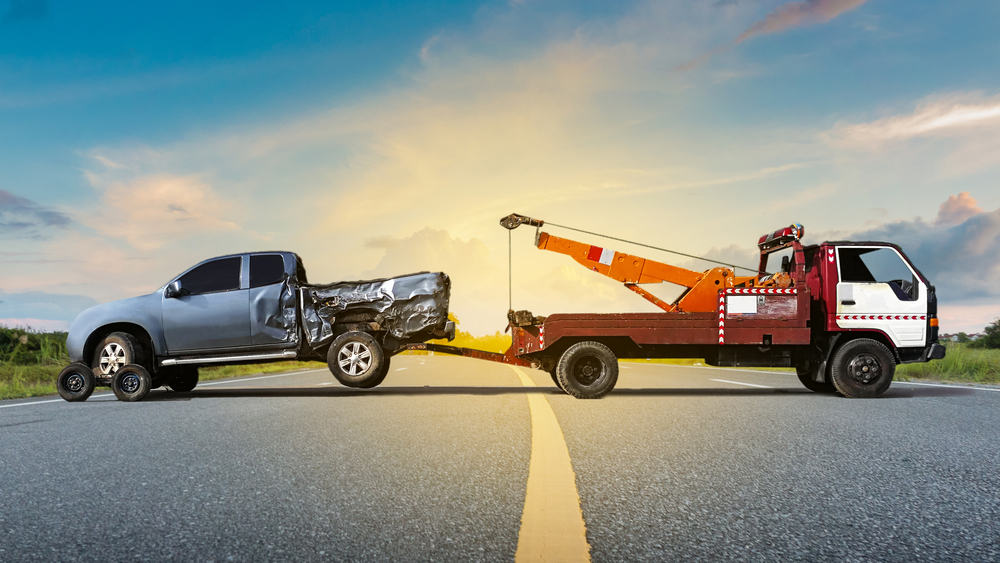
Towing a semi truck is expensive in ways that aren’t always obvious until after the fact. The base rate to hook up and move a heavy-duty rig typically runs between $300 and $500, and that’s before mileage. Add $10 per mile to the nearest qualified shop, and a breakdown 40 miles out turns into a $900 bill before a single wrench has turned. That’s just the tow.
Once the truck arrives at the shop, it enters a queue. Shops don’t drop everything for a tow-in — your truck waits behind whatever came in before it. That wait alone runs 24 hours or more in most cases. By the time a technician actually looks at it, you’ve already lost a full day. Then add the diagnostic fee, the labor, and the parts, and you’re looking at a situation that started as a broken coolant hose and turned into a multi-day, multi-thousand-dollar event.
How a Tow Drains Your Hours of Service Clock Faster Than You Think
Here’s the part most drivers don’t think through until they’re sitting in a shop parking lot watching their clock run: your HOS window doesn’t pause because your truck broke down. Under FMCSA rules, property-carrying drivers get an 11-hour driving limit and a 14-hour on-duty window per shift. A routine breakdown — even one that’s blocking traffic or happening in dangerous conditions — does not trigger an HOS exemption. The clock keeps moving.
Walk through the math on a real scenario. Say you’re westbound on I-94 approaching the I-75 interchange at 7 AM with nine hours left on your driving clock. You blow a coolant hose. You call a tow. The truck arrives in 45 minutes, gets you loaded and hauled to a shop in Dearborn, and you’re checked in by 9:30 AM. The shop puts you in the queue. By the time a technician looks at your truck, it’s early afternoon.
You’ve burned six hours of your 14-hour window sitting in a waiting room. Even if the repair is fast, you may not have enough hours left to complete your run. You’re looking at a mandatory 10-hour reset — which means losing the rest of that day and the overnight. That’s not a worst-case scenario. That’s a pretty typical tow-and-shop experience for a commercial driver in Wayne County, MI.
The cost isn’t just the tow bill and the repair. It’s the delivery you didn’t make, the reset hours you burned, and the downstream schedule disruption that follows. Fleet managers who’ve been through this once tend to look at the tow-first default very differently the second time.
One more thing worth knowing: the belief that a breakdown automatically pauses your HOS clock is a documented misconception in the industry. It doesn’t. The only HOS exemptions that apply in genuine emergency situations are narrow, specific, and almost never triggered by a standard breakdown — even a serious one. Assuming otherwise can put a driver in a compliance problem on top of a mechanical one.
When Is a Tow Actually the Right Call?
None of this is an argument against towing. There are situations where a tow is the only option — a catastrophic frame failure, a blown engine that needs a full rebuild, a rollover or accident recovery. When the truck genuinely cannot be repaired on-site, getting it to a shop is the right move and there’s no way around it.
The problem isn’t towing. The problem is the industry habit of defaulting to a tow when on-site repair is possible. A towing company that doesn’t employ certified mechanics has one tool available: the hook. If they can’t fix it, they move it. That’s their business model, and it’s a legitimate one — but it means the decision about whether your truck needs a tow is being made by someone whose answer is almost always going to be yes.
A mobile mechanic operates from a different starting point. The first question isn’t “where do we take it” — it’s “can we fix it here?” For the most common commercial breakdowns — dead batteries, blown coolant hoses, air system leaks, alternator failures, flat tires, fuel delivery issues, drive shaft problems, hydraulic hose failures — the answer is usually yes. These are things that can be diagnosed and resolved at the breakdown site, without moving the truck, in a fraction of the time a tow-and-shop scenario would take.
The repair happens where the truck stopped, the driver stays on-site, and the clock keeps moving in the right direction. Knowing the difference between a breakdown that needs a tow and one that needs a mechanic is the most useful thing a driver or fleet manager can have figured out before something goes wrong. Because in the moment, with a dispatcher calling and traffic moving around you, that’s not the time to be working it out for the first time.
Mobile Semi Truck Repair: What the On-Site Option Actually Looks Like
Mobile truck repair isn’t a newer, fancier version of roadside assistance. It’s a fundamentally different service. Instead of moving the truck to the solution, the solution comes to the truck — a certified mechanic, a fully stocked service vehicle, and the tools and parts to handle the repair where you stopped.
The response time for a mobile dispatch is typically 45 to 90 minutes. Once on-site, most common repairs are completed in 30 to 90 minutes. Compare that to the tow-and-shop timeline and the difference is measured in hours — sometimes in an entire lost workday. For a driver running freight through Wayne County, MI’s industrial corridors, that gap is the difference between making the delivery and missing it.
Mobile Diesel Service: What Can Actually Be Fixed Without a Tow
The range of repairs a qualified mobile diesel service can handle on-site is wider than most drivers expect. This isn’t a jump-start-and-tire-change operation. A properly equipped mobile mechanic with a strong parts inventory can address the majority of commercial breakdowns without the truck ever moving.
That includes alternator replacement, coolant system repairs, air brake system leaks, fuel delivery problems, flat tire changes, drive shaft replacement, hydraulic hose fabrication and repair, ABS diagnostics, and leaf spring replacement. Refrigeration units on temperature-sensitive trailers — Thermo-King and Carrier systems — are also serviceable on-site when the mechanic knows what they’re doing. These aren’t edge cases. They’re the most common reasons commercial trucks stop moving on Wayne County roads.
The reason this matters beyond just convenience is parts. A mobile repair is only as useful as what’s on the service truck when it arrives. If the mechanic shows up, diagnoses the problem, and then has to leave to get parts, you’ve gained nothing over a tow except a longer wait. That’s why parts inventory is one of the first questions worth asking any mobile service provider before you save their number.
For fleet managers building a vendor list before something goes wrong, the capability question goes deeper than “do they do mobile repair?” It’s: what specific repairs can they handle, what truck brands do they cover, and do they carry the parts to finish the job on the first visit? A provider who can give clear answers to those three questions is a very different resource than one who offers a general response without specifics.
Why Mechanic Credentials Matter More Than You Might Expect for Roadside Calls
Michigan is one of the only states in the country that legally requires mechanic certification. Under the Motor Vehicle Service and Repair Act, mechanics operating in Michigan must hold state certification or equivalent credentials — it’s not optional, and it’s not a formality. That’s a meaningful consumer protection standard, and it’s worth knowing about when you’re evaluating who to call.
The reason credentials matter specifically for roadside and mobile repair — more than for a standard shop visit — is that the mechanic arriving at your breakdown site is making real-time diagnostic decisions without the equipment, lifts, and support systems of a full shop environment. The quality of that diagnosis determines whether your truck gets fixed on-site or gets towed unnecessarily. A highly credentialed mechanic can identify and resolve problems that a less experienced technician would escalate to a tow. That distinction has a direct dollar value when you’re calculating the cost of a breakdown.
We’re led by Dr. Phillip Marin, who holds three Ph.D. degrees in Diesel Engineering, Drivetrains, and Metal Alloys, and our team holds ASE Certified Truck Master Mechanic credentials — the highest classification available under both the ASE system and Michigan’s certification framework. That depth of expertise is why our mobile-first model works in situations where a general roadside service would default to a tow. We can diagnose more, fix more, and make better calls about what actually needs to happen with your truck.
We’ve been doing this since 1999, based out of Southwest Detroit at 8332 Kirkwood St — right in the middle of Wayne County’s freight corridor, close to the I-75, I-94, and I-96 interchange. That’s not a coincidence. It’s where the trucks are, and it’s where we need to be when someone calls. We don’t charge extra for nights, weekends, or holidays, and our rates stay consistent regardless of when you need us. When a customer tells us the estimate matched the final bill, that’s just how we operate.
Choosing Between a Tow Truck and Mobile Repair in Wayne County, MI
The decision between calling a tow truck and calling a mobile mechanic isn’t always obvious in the moment, but it’s worth thinking through before you’re on the shoulder of I-275 at midnight trying to figure it out in real time. The short version: if your truck can be fixed where it stopped, fixing it there is almost always faster, cheaper, and better for your HOS clock than a tow to a shop.
Not every breakdown can be handled on-site. But more of them can than most drivers realize — and having a provider with the credentials, the parts, and the experience to make that call accurately is what separates a 90-minute fix from a 24-hour ordeal.
If you’re in Wayne County and you want a straight answer about what we can handle and how fast we can get there, call us at 313-999-3088. J&J Truck & Trailer Repair is available around the clock, and we’ll tell you exactly what you’re dealing with before we ask you to commit to anything.