You hear the thump. The steering pulls. You already know what happened before you even look. Getting a flat tire on a Michigan highway is one of those situations where every second feels longer than it should — and the last thing you need is to call the wrong number and wait two hours for help that can’t actually fix the problem on the spot.
Most people don’t know there’s a meaningful difference between calling a tow truck and calling a mobile tire service. That difference can be the gap between 30 minutes and half a day. Here’s what you actually need to know.
When to Call a Tow Truck for a Flat Tire — and When Not To
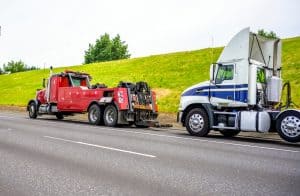
A tow truck makes sense in a specific set of circumstances: your rim is visibly bent or cracked, the tire sidewall has blown out completely and the vehicle can’t be safely stabilized, or you’re in a position on the road where it’s genuinely unsafe to work around the vehicle. Those situations are real, and a tow is the right answer when they apply.
But here’s what most drivers don’t realize — those scenarios are the exception, not the rule. The majority of flat tires are caused by a nail, a screw, road debris, or a slow leak from a puncture. In those cases, the tire doesn’t need to come off the highway on a flatbed. It needs a technician with the right equipment to show up and handle it where you’re parked.
Calling a tow truck by default for a flat tire often means paying for a tow you didn’t need, waiting longer than necessary, and still ending up at a shop where you wait again. If a mobile service can fix it on-site — and in most cases, it can — that’s the faster, simpler path.

What Happens When You Drive on a Flat Tire, Even Slowly
This is one of the most common and costly mistakes drivers make. The instinct is understandable — you’re on I-94 near Romulus or on I-75 through Detroit, traffic is moving, and pulling over feels like the harder choice. So you nurse it to the next exit, driving slowly, hoping the tire holds.
What’s actually happening during those few hundred yards is that the rim — the metal wheel itself — is grinding against the road surface. A flat tire has no cushion between the rim and the pavement. Even at low speed, that contact destroys the rim fast. What started as a tire change that a mobile service could have handled in 30 minutes on the shoulder becomes a tire-and-rim replacement that costs significantly more and can’t be done on-site.
Wayne County roads make this worse. The freeze-thaw cycles that hit the region every winter leave behind potholes and uneven pavement that can finish off a rim in a matter of seconds. If you’re on a stretch of I-96 or I-275 and you feel that flat, the safest and cheapest move is to get off the road as quickly and safely as possible, put your hazard lights on, and call for help before you move the vehicle another inch.
There’s also a real safety dimension here. Tire blowouts account for roughly 11,000 crashes per year in the United States, and driving on a compromised tire at any speed increases your risk of losing control. On a high-speed corridor like I-94 through Wayne County — where freight traffic is constant and speeds are high — that risk isn’t abstract. Pull over. Call. Wait for help to come to you.
For drivers with run-flat tires, the rules are a little different. Run-flats are designed to allow limited driving after a puncture — typically up to 50 miles at reduced speed — but they still require professional service afterward and can’t be repaired the same way as a conventional tire. If your vehicle came equipped with run-flats, you have more time to reach a safe stopping point, but you still need a qualified technician to assess and replace the tire properly.
What If You Don't Have a Spare Tire?
This is a situation more and more drivers are finding themselves in. About 15% of new vehicles now come with run-flat tires as standard and no traditional spare at all. Many others carry only a temporary “donut” spare — which is fine for getting to a shop but not designed for highway speeds or long distances. And plenty of drivers simply have a spare that’s been sitting in the trunk for years, flat and forgotten.
If you’re in Wayne County with no usable spare, calling a tow truck isn’t your only option. A mobile tire service that carries replacement tires and rims on the truck can supply and mount a tire on-site. That’s the difference between a mobile repair unit and a basic tow — the right mobile service comes stocked, not just with tools, but with the parts to actually finish the job.
We carry tires and rims on our mobile units specifically for this reason. Whether you’re a passenger car driver on US-12 through Dearborn or a fleet operator whose truck just dropped a tire on I-275 near the airport, we can get you rolling without a tow shop in the picture. The goal is always to fix the problem where you are, not to move it somewhere else and make you wait again.
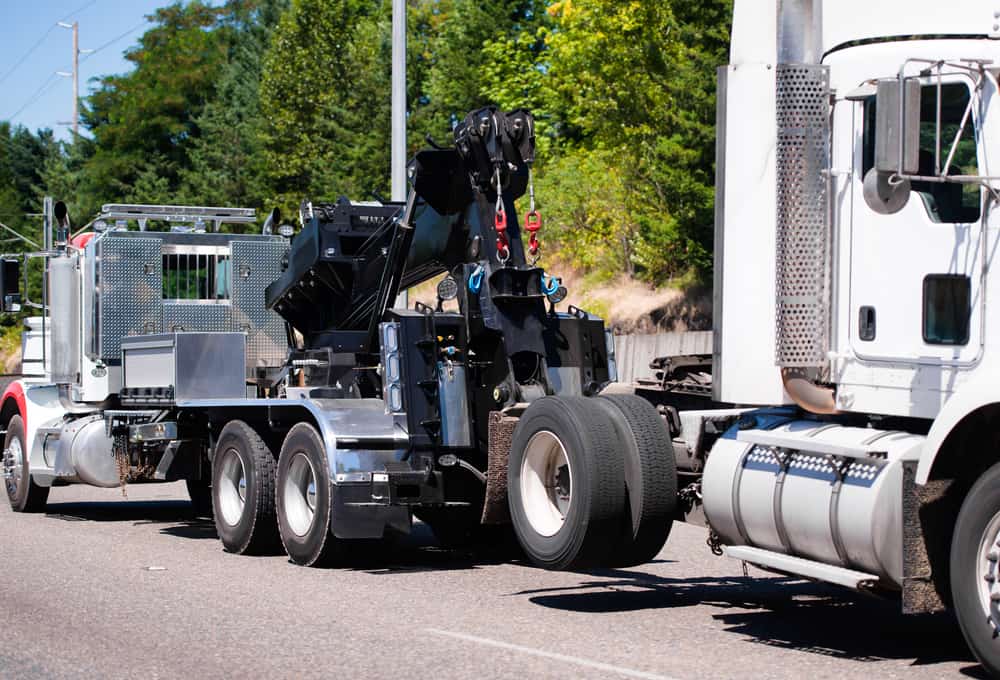
For commercial drivers, this matters even more. A semi-truck or heavy-duty trailer sitting on the shoulder of I-94 isn’t just an inconvenience — it’s a safety hazard, a potential DOT issue, and a direct hit to your delivery schedule. The longer that truck sits, the more expensive the situation gets. Having a provider who shows up with the right commercial tires, the right equipment, and the expertise to handle a heavy-duty vehicle on-site is the difference between a 30-minute fix and a half-day ordeal.
The bottom line: not having a spare doesn’t automatically mean you need a tow. It means you need a mobile service that actually comes prepared.
Mobile Tire Replacement: What It Actually Involves
Mobile tire replacement is exactly what it sounds like — a technician comes to you, assesses the situation, and either repairs or replaces the tire on the spot. No tow, no shop, no waiting room. For most flat tire scenarios, this is the faster and smarter option.
What separates a good mobile tire service from a basic one is what they show up with. A technician who arrives with just a jack and a tire iron can only help you if you already have a usable spare. A properly equipped mobile unit carries tires, rims, and the tools to mount and balance them on-site — which means the job gets done regardless of your spare situation.
The process itself is straightforward: the technician arrives, assesses the tire and rim, determines whether a repair or full replacement is needed, and gets to work. In most cases, that’s a 30-minute job from arrival to you pulling back onto the road.
Mobile Tire Change for Semi-Trucks and Heavy-Duty Vehicles in Wayne County
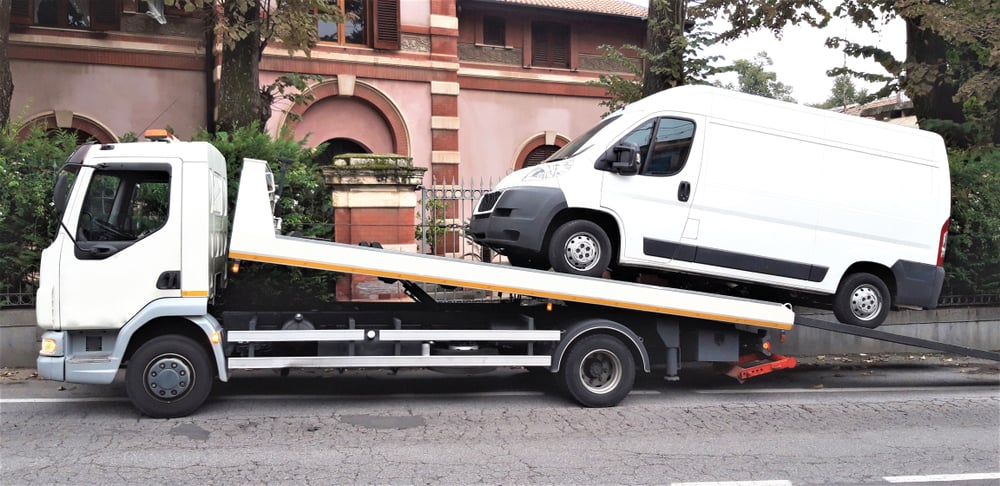
Most roadside assistance conversations assume you’re driving a passenger car. But a significant portion of the drivers on Wayne County’s highway corridors are operating something much larger — semi-trucks, flatbeds, box trucks, tankers, and heavy trailers moving freight through one of the Midwest’s busiest commercial corridors. For those drivers, a flat tire is a completely different situation, and most roadside services simply aren’t equipped to handle it.
Commercial truck tires operate under extreme load and heat conditions. A blowout on a loaded semi is not the same event as a nail in a car tire. The equipment required to safely lift, remove, and replace a commercial truck tire is specialized, and the technician handling it needs to understand air brake systems, axle configurations, and DOT compliance — not just basic tire mechanics.
We handle both light-duty and heavy-duty vehicles, and that’s not a casual claim. Our mobile units carry tires and rims for major commercial truck manufacturers — Freightliner, Peterbilt, Kenworth, Volvo, International, Mack, and others. When a truck goes down on I-94 near Romulus or on I-75 through Detroit, we show up with what’s needed to fix it on-site, not just assess it and call for a tow.
For owner-operators and fleet managers, the math is straightforward. Every hour a truck sits on the shoulder is lost revenue, a missed delivery window, and potentially a load that’s at risk. A mobile tire service that can respond quickly and finish the job on-site is not a convenience — it’s the only option that makes financial sense. The industry benchmark for commercial tire service response is a two-hour roll time. We aim to do considerably better than that, and our customers’ reviews reflect it.
Dr. Phillip Marin, who leads our team, holds three Ph.D. degrees in Diesel Engineering, Drivetrains, and Metal Alloys. That level of expertise is not standard in this industry — and for a commercial operator whose truck is sitting on the side of I-96 with a blown steer tire, it’s exactly the kind of qualification that matters.
Frequently Asked Questions About Roadside Assistance for a Flat Tire
How long does mobile tire service actually take?
In most cases, once a technician arrives, the job takes around 30 minutes. That’s from pulling up to you pulling away. The total time from your call to being back on the road depends on how far the technician is from your location, but for drivers in Wayne County — on I-94, I-75, I-96, I-275, or I-696 — we’re typically closer than you’d expect. We know these corridors, and we know the fastest ways to reach you on them.
Will the price change from what I’m quoted on the phone?
No. Our rates are consistent — the same rate applies whether it’s 2 p.m. on a Tuesday or 2 a.m. on a holiday weekend. We don’t charge extra for nights, weekends, or holidays. What we quote is what you pay. One of our customers put it plainly: “He gave us an estimate and pretty much that’s what it was.” That’s the standard we hold ourselves to on every call.
Can you handle a flat tire on a semi-truck or trailer?
Yes. We work on both light-duty vehicles (under 10,000 lbs) and heavy-duty commercial vehicles (over 10,000 lbs), including semi-trucks, trailers, and specialty vehicles. We carry the parts and equipment to handle commercial tire service on-site, which means no tow to a shop and no waiting for a facility to have an opening. For commercial drivers operating on Wayne County’s freight corridors, this is often the only option that doesn’t cost them an entire workday.
What if my car doesn’t have a spare tire?
We carry tires and rims on our mobile units, so the absence of a spare doesn’t mean you’re automatically looking at a tow. We can supply and mount a replacement tire on-site for most vehicle types. If you’re unsure whether we carry what your vehicle needs, call us at 313-999-3088 and we’ll tell you directly.
Is it safe to wait on the highway shoulder for a mobile service?
As safe as you can make it. Once you’ve pulled as far off the road as possible, turn on your hazard lights, stay in your vehicle if traffic is passing close, and wait. Do not stand behind or directly beside the vehicle. Michigan highways like I-94 and I-75 through Wayne County carry heavy traffic at high speeds, and the shoulder is not a safe place to stand. A good technician will position their vehicle to create a buffer between your car and traffic — that’s standard practice and something we follow on every call.
How is roadside assistance for a flat tire different from what my insurance covers?
Many insurance policies include roadside assistance as an add-on, but what that actually covers varies widely. Most insurance-dispatched services will change your spare if you have one or arrange a tow if you don’t. They typically don’t supply replacement tires, and response times through a dispatch network can be unpredictable — especially during high-demand periods like Wayne County’s pothole season in early spring or summer holiday weekends. Calling us directly gives you a clearer picture of timing and cost before anyone shows up.
What Wayne County Drivers Should Know Before the Next Flat Tire Happens
A flat tire is rarely a disaster — but it can become one if you make the wrong call in the first few minutes. Driving on it, defaulting to a tow when a mobile service could fix it on-site, or calling a provider who isn’t equipped for your vehicle type all turn a manageable situation into a longer, more expensive one.
The short version: if your rim is intact and the tire is repairable or replaceable on-site, a mobile tire service is almost always the faster and smarter option. Know that before it happens, so when it does, you’re not making the decision under pressure on the shoulder of I-94.
If you’re in Wayne County and you need help now — or you want to save a number before you ever need it — J&J Truck & Trailer Repair is available 24 hours a day, seven days a week, at 313-999-3088. Light-duty or heavy-duty, passenger car or semi-truck, we come to you.