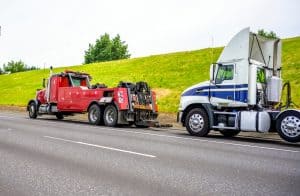

When your truck goes down, you don’t have time to research. You need someone who answers the phone, knows what they’re doing, and can get to you fast — with the parts already on the truck.
That’s the standard. Not every provider meets it.
This guide is for commercial drivers and fleet operators in Wayne County who want to understand what quality truck repair actually looks like, what causes the most common breakdowns, and how to make a better call the next time something goes wrong. We’ll also cover what credentials matter, why mobile repair beats shop wait times in most situations, and what Wayne County’s roads and winters do to commercial vehicles specifically.
Commercial Truck Repair: What It Actually Covers
Commercial truck repair is a broad term, and that’s part of the problem. When most drivers search for a truck mechanic or a truck repair center, they’re not always sure what they need — only that something is wrong and they need it fixed now.
Quality commercial truck repair covers everything from diesel engine diagnostics and brake system overhauls to drivetrain failures, trailer electrical issues, reefer unit problems, and ABS faults. It’s not just the tractor. A rig is only as functional as its weakest component, and a mechanic who only works on the cab leaves trailer failures — landing gear, air ride suspension, refrigeration units — completely unaddressed.
The best mobile truck mechanics carry parts for all of it. Drive-shafts, transmissions, tires, rims, batteries, alternators — the most common failure components should already be on the service vehicle when they pull up to you.

Heavy Duty Truck Repair: What's Different About Working on a Semi
Heavy duty truck repair isn’t a scaled-up version of working on a pickup. The systems are fundamentally different — diesel engines operate at higher compression ratios, generate more heat, and require specific diagnostic tools and training that most general mechanics simply don’t have. Drivetrain components on a semi are engineered for sustained high-load operation, which means failures present differently and repairs require a different level of expertise.
Take brake systems as an example. A semi’s air brake system is nothing like a hydraulic disc brake on a passenger vehicle. Diagnosing an ABS fault or a failing slack adjuster requires both the right equipment and direct experience with air brake architecture. The same applies to turbochargers, fuel injection systems, and emissions components like DPF filters — each of these requires a technician who works on them regularly, not occasionally.
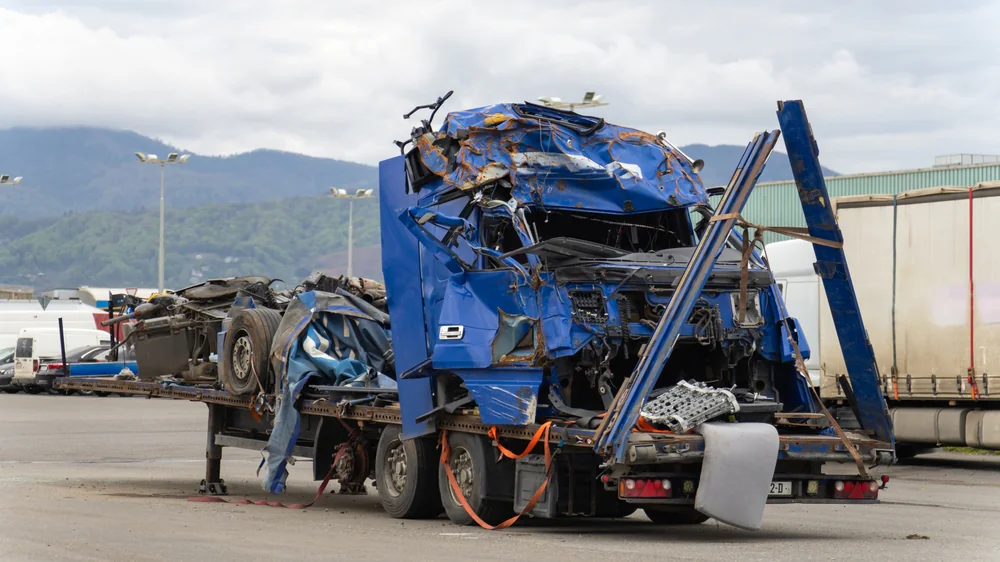
Drivetrain failures are one of the most financially damaging breakdowns a commercial driver can face. A failed differential or a blown transmission doesn’t just stop the truck — it can destroy connected components if it’s misdiagnosed or improperly repaired. This is exactly the kind of failure where the gap between a qualified technician and an unqualified one becomes very expensive, very fast.
The other factor is parts. A heavy duty repair on the side of I-75 in Wayne County is only possible if the mechanic arrives with the right components already on the vehicle. Waiting for parts delivery in January — sitting on a frozen shoulder while a part ships from a warehouse — isn’t a repair. It’s a delay with a labor charge attached.
Semi Truck Tire Repair: More Than Just a Blowout
Tire issues are the single most common cause of roadside breakdowns for semi trucks. That’s not a minor footnote — it means that a significant portion of commercial vehicle downtime comes down to something that is largely preventable and, when it does happen, should be fixable on the spot.
A proper truck tire service means more than carrying a spare. It means arriving with the right tires and rims for the axle configuration, having the equipment to mount and balance them roadside, and being able to assess whether the failure was a one-off event or a symptom of a larger issue — improper inflation management, worn suspension components, or an alignment problem that will take out the next tire too.
Tire shop semi truck service also includes knowing when a repair isn’t appropriate. A sidewall blowout on a steer tire is not a patch-and-go situation. A mechanic who tries to talk you into a repair that compromises your safety is a liability, not a service.
In Wayne County, the tire picture is complicated by two seasonal factors. Winter temperature swings cause significant pressure fluctuation — roughly 1 PSI for every 10-degree Fahrenheit change. A tire that’s properly inflated at 40°F can be dangerously underinflated by January morning. Then spring hits, and Michigan’s freeze-thaw cycle opens up potholes that can destroy a tire and bend a rim in a single impact. The stretch of I-94 through Dearborn and into Detroit sees some of the heaviest commercial truck traffic in the Midwest, and the road surface reflects it.
Good truck tire service means understanding these conditions, not just swapping rubber. If your tires are taking repeated damage in the same pattern, that’s diagnostic information — and a qualified mechanic will tell you so.
Mobile Semi Truck Repair: Why It's the Smarter Call in Most Breakdowns
The default assumption when a truck breaks down is that it needs to go to a shop. That assumption costs drivers and fleet operators significant time and money every year.
Mobile semi truck repair — where a fully equipped mechanic comes to the truck — eliminates towing costs, cuts wait times from days to hours or less, and gets the driver back on the road without the rig ever leaving the breakdown location. For the majority of commercial truck failures, mobile repair isn’t a compromise. It’s the better option.
The caveat is capability. A mobile diesel truck repair service is only as good as the technician’s training, the diagnostic tools on the vehicle, and the parts inventory we carry. A mobile mechanic who shows up without the right parts, or who lacks the credentials to diagnose a complex fault code, isn’t saving you time — they’re adding a step between you and a real fix.
What a Qualified Mobile Diesel Mechanic Actually Brings to a Breakdown
When we talk about mobile diesel repair, the word “qualified” is doing a lot of work. There is a significant difference between a technician who has worked on diesel engines for decades and one who bought a set of tools and started taking calls. The problem is that from the side of the road, it can be hard to tell them apart — until the work is done and the truck either runs or it doesn’t.
The credential that matters most in this industry is ASE certification, specifically the T1 through T8 series for medium and heavy truck technicians. Earning Master Truck Technician status through ASE requires passing all eight exams — covering diesel engines, drive trains, brakes, suspension and steering, electrical systems, HVAC, preventive maintenance, and cab/body — plus documented years of hands-on experience. It’s not a weekend course. Certifications also have to be renewed every five years, which means the credential reflects current knowledge, not just a test someone passed a long time ago.
Beyond ASE, the depth of a mobile diesel tech’s diagnostic capability matters enormously for complex failures. Fault codes on modern diesel engines can point in several directions at once — a turbo fault might be the turbo itself, a boost pressure sensor, an intercooler leak, or an EGR issue. A technician who understands the underlying engineering can narrow that down quickly. One who doesn’t will guess, and guessing on a diesel engine is expensive.
Mobile diesel service at its best means arriving at a breakdown with the diagnostic tools to identify the problem accurately, the parts to fix the most likely failures on the spot, and the experience to know when a roadside repair is sufficient versus when the truck needs to be stabilized and brought in for deeper work. That last judgment call — knowing the limits of what’s safely repairable roadside — is itself a sign of expertise.
For drivers on I-94 through Wayne County, or operators running freight in and out of the automotive supplier corridors around Dearborn and Romulus near DTW, a mobile diesel mechanic near your location who can respond at any hour isn’t a luxury. It’s a business continuity decision.
What a Real 24 Hour Diesel Mechanic Looks Like in Wayne County
A lot of roadside assistance providers list “24/7 availability” on their website. Fewer actually answer the phone at 3 AM on a Sunday in January. And fewer still show up with the right equipment and the expertise to fix the problem on-site.
Wayne County’s commercial trucking demand doesn’t follow business hours. Ford’s supply chain operations, the freight corridors feeding DTW, and the automotive manufacturing facilities throughout Dearborn and the surrounding area run around the clock. A breakdown at 2 AM on a Tuesday is just as business-critical as one at noon on a Friday. The just-in-time logistics model that most of these operations run on doesn’t have room for “we open at 8.”
The other reality of Wayne County winters is that after-hours breakdowns are often the most dangerous ones. Diesel fuel gelling — when cold temperatures cause diesel to thicken and clog fuel filters and lines — typically happens overnight, when temperatures drop to their lowest. Diesel begins to gel at around 10 to 15 degrees Fahrenheit, a threshold that Wayne County regularly hits from December through February. A driver who parks a running truck and comes back to one that won’t start in the morning isn’t dealing with a mechanical failure — they’re dealing with a fuel chemistry problem that requires a specific fix, not a jump start.
Battery failures follow the same overnight pattern. Cold cranking amps drop sharply in sub-zero temperatures, and a battery that tested fine in October can leave a driver stranded by January. Road salt corrosion — Michigan uses heavy salt application on its roads — attacks brake lines over time, and the damage often surfaces as a sudden failure rather than a gradual warning.
A genuine 24 hour diesel mechanic is one who answers the call at any hour, dispatches immediately, and arrives with the parts and knowledge to handle these specific, Wayne County-specific failure modes. The rate should be the same regardless of when you call — no surcharges for nights, weekends, or holidays. That’s not a premium service. It’s the baseline of what “24/7” should mean.
At J&J Truck & Trailer Repair, we don’t charge extra for night, holiday, or weekend service calls. The rate you get at 6:30 AM on a Sunday is the same rate you’d get at 10 AM on a Wednesday. We’ve had customers call us in 7-degree weather on a Sunday morning because we were the only repair service with 24/7 availability who actually answered. That’s the standard we hold ourselves to.
Finding Reliable Truck Repair in Wayne County Before You Need It
The worst time to research a mobile truck mechanic is from the shoulder of I-75 at midnight with a flashlight and a dead phone battery. The best time is right now, before anything goes wrong.
What you’re looking for is straightforward: a mechanic with documented credentials — ASE T1 through T8 Master certification at minimum — who operates 24/7 without hidden surcharges, carries a real parts inventory on the vehicle, and has verifiable reviews from commercial drivers in your area. The credentials matter because they’re checkable. The reviews matter because named, specific testimonials from real jobs are worth more than a generic star rating.
Wayne County’s roads, winters, and industrial traffic patterns create breakdown conditions that general mechanics aren’t equipped for. You need someone who understands diesel fuel gelling, air brake systems, reefer unit failures, and drivetrain diagnostics — not someone who handles passenger cars on weekdays and takes truck calls when they come in.
J&J Truck & Trailer Repair has operated in the Detroit and Wayne County area for over 40 years. Our lead mechanic, Dr. Phillip Marin, holds three Ph.D. degrees in Diesel Engineering, Drivetrains, and Metal Alloys — a combination of credentials that directly applies to the failures that strand commercial drivers. If you want to talk through what we cover or need someone on the road right now, call us at 313-999-3088. We answer.